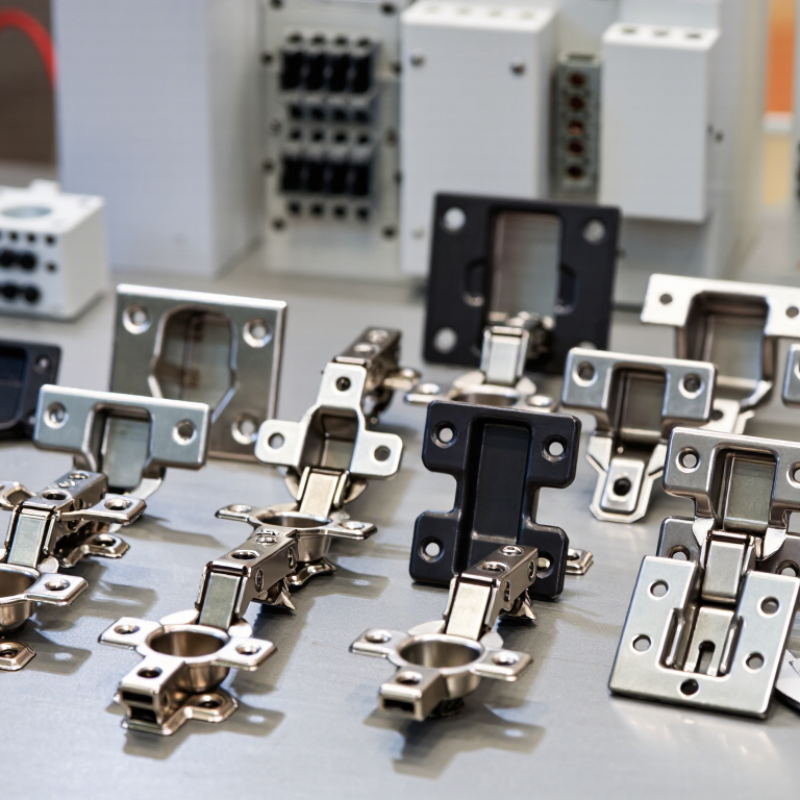
| Concealed Lift-Off Hinge | A two-part hinge installed inside or behind the enclosure edge. The panel can usually be lifted away after opening to a specified angle. | Provides a clean exterior appearance, supports removable doors, and simplifies maintenance access where complete panel removal is useful. | Typical opening: 90°–120°
Materials: zinc alloy, stainless steel, steel, or reinforced polymer
Load: commonly selected for light- to medium-weight doors | Electrical control cabinets, automation panels, machine guards, instrument enclosures, and removable service doors. | Check lift-off direction, door clearance, hinge-side space, corrosion resistance, door weight, and alignment tolerance. |
| External Butt Hinge | A visible hinge with two leaves connected by a pin. One leaf is fixed to the enclosure body and the other to the door or panel. | Provides a simple, robust pivot with easy installation and straightforward replacement. | Typical opening: 90°–180° depending on geometry
Materials: stainless steel, plated steel, aluminum, or zinc alloy
Configuration: fixed-pin or removable-pin | Industrial cabinets, equipment doors, HVAC housings, generator enclosures, and general-purpose sheet-metal panels. | Verify mounting-hole pattern, pin retention, door stop requirements, load distribution, and resistance to vibration. |
| Continuous Piano Hinge | A long hinge extending along part or most of the panel edge, distributing the door load over a larger length. | Improves door alignment, reduces local stress, limits panel distortion, and supports long or wide access doors. | Length: supplied in cut-to-length or standard lengths
Construction: interleaved knuckles with a continuous pin
Materials: stainless steel, steel, aluminum, or brass | Large electrical enclosures, battery cabinets, server and network cabinets, machine covers, and long access panels. | Specify hinge length, pin diameter, leaf width, mounting method, required clearance, and cut-edge protection. |
| Adjustable Concealed Hinge | An internal hinge with adjustment features for vertical, horizontal, or depth alignment after installation. | Corrects installation tolerances, maintains an even door gap, and helps achieve reliable gasket compression. | Adjustment: commonly two-way or three-way
Typical use: precision enclosure doors
Installation: screw-mounted or captive fastener design | Precision automation cabinets, cleanroom equipment, electronic enclosures, and panels requiring repeatable sealing. | Confirm adjustment range, tool access, maximum door mass, gasket compression, and compatibility with the enclosure profile. |
| Spring-Loaded Hinge | A hinge incorporating a spring element that assists door opening, closing, positioning, or return to a preferred position. | Reduces operating effort, helps hold or return a cover, and can support controlled access to frequently serviced equipment. | Spring action: opening-assist or closing-return
Materials: steel, stainless steel, or zinc alloy with spring steel components
Selection: based on door mass and center of gravity | Machine safety covers, control boxes, battery compartments, mobile equipment, and service access doors. | Match spring torque to door weight, define operating temperature, check pinch-point risks, and verify cycle-life testing. |
| Friction or Torque Hinge | A hinge with controlled resistance that holds a panel at an intermediate angle without a separate stay or prop. | Provides position control, prevents uncontrolled movement, and improves access to display, inspection, and service panels. | Operating range: commonly 90°–180°
Torque: specified in N·m and dependent on panel geometry
Adjustment: fixed or adjustable resistance | Operator interfaces, monitor covers, inspection windows, portable instruments, and compact machinery enclosures. | Calculate torque at the actual center of gravity, test repeated cycles, and consider temperature-related changes in resistance. |
| Detachable or Quick-Release Hinge | A hinge designed to allow rapid panel removal through a lift-off pin, sliding action, captive release, or tool-assisted mechanism. | Reduces service time and provides fast access where doors or covers must be removed regularly. | Release method: lift-off, slide-out, pin release, or quarter-turn mechanism
Safety: may include captive pins or secondary retention | Maintenance panels, production machinery, test equipment, packaging lines, and modular electrical enclosures. | Specify accidental-release protection, retention method, repeatability, operator access, and service frequency. |
| Heavy-Duty Weld-On Hinge | A robust hinge welded directly to steel or stainless-steel doors and frames for high-load or demanding industrial service. | Supports heavy doors, withstands mechanical abuse, and provides a strong permanent mounting connection. | Construction: welded barrels, knuckles, and pins
Materials: carbon steel or stainless steel
Use: high-load doors and structural access covers | Industrial machinery, outdoor cabinets, transport equipment, energy systems, heavy steel enclosures, and safety guarding. | Evaluate weld procedure, heat distortion, pin lubrication, load rating, door sag, corrosion protection, and field repair needs. |
| Lift-Off Door Hinge with Gasket Clearance | A hinge geometry that permits the door to move away from the frame before or during opening, protecting the gasket from excessive shear. | Supports reliable sealing, reduces gasket wear, and allows doors with compression seals to open without binding. | Common seal use: EPDM, silicone, neoprene, or polyurethane gaskets
Motion: lift-off, cam action, or offset movement | IP-rated electrical enclosures, outdoor control boxes, washdown equipment, and dust- or moisture-sensitive systems. | Confirm gasket profile, compression distance, IP or NEMA enclosure target, door gap, and drainage requirements. |
| Tamper-Resistant Hinge | A hinge designed to make removal or unauthorized access more difficult, often using concealed mounting or non-removable pins. | Improves physical security, protects internal components, and discourages unauthorized panel removal. | Features: concealed leaves, fixed pins, security fasteners, or captive hardware
Materials: stainless steel, plated steel, zinc alloy, or hardened components | Outdoor utility cabinets, infrastructure equipment, public-access panels, traffic systems, and security-sensitive enclosures. | Define threat level, tool access, corrosion exposure, service procedure, emergency opening requirements, and security hardware compatibility. |
| Stainless-Steel Hygienic Hinge | A corrosion-resistant hinge with smooth surfaces, rounded edges, and limited dirt traps for hygienic or washdown environments. | Supports frequent cleaning, resists corrosion, and reduces locations where contaminants can accumulate. | Common grade: 304 stainless steel; 316 stainless steel for higher chloride exposure
Finish: polished, brushed, or electropolished depending on design | Food-processing machinery, pharmaceutical equipment, medical systems, beverage lines, and coastal or chemical environments. | Check material grade, surface roughness requirement, cleanability, chemical compatibility, drainage, and applicable hygiene rules. |
| EMI or Shielding-Compatible Hinge | A hinge selected or designed to maintain enclosure continuity while allowing movement of a shielded access door. | Supports electromagnetic shielding, grounding continuity, and controlled door movement in sensitive electronic systems. | Typical materials: conductive metals or plated conductive surfaces
Design focus: low-resistance bonding and compatible contact surfaces | Telecommunications cabinets, test equipment, radio-frequency systems, data infrastructure, and industrial control electronics. | Evaluate bonding path, surface finish, galvanic compatibility, shielding gasket arrangement, and required EMC validation method. |
| Multi-Point Door Hinge System | A coordinated hinge arrangement using two or more hinge points to support tall, heavy, or high-sealing doors. | Improves load sharing, door stability, gasket compression, and resistance to sag during long service life. | Configuration: two-point, three-point, or engineered multi-point layout
Selection basis: door height, mass, stiffness, and opening frequency | Large switchboards, industrial control rooms, battery energy storage cabinets, machine housings, and tall outdoor enclosures. | Review hinge spacing, frame stiffness, installation sequence, door sag allowance, load distribution, and maintenance access. |
| Explosion-Protected Equipment Hinge | A hinge used on equipment designed for hazardous locations, where the hinge geometry and materials must not compromise the certified enclosure design. | Allows safe access while preserving the enclosure’s mechanical integrity and certified protection concept. | Application: hazardous-area equipment only when integrated into an approved design
Requirements: certified assembly, controlled clearances, and specified materials | Oil and gas equipment, chemical processing systems, mining equipment, and classified-area electrical enclosures. | Do not select the hinge independently; verify the complete certified assembly, applicable hazardous-area standard, temperature class, and installation method. |