How to Choose the Best Filling Machine for Your Business?
Choosing the best filling machine for your business is a critical task. This decision can impact your production efficiency and product quality. With numerous options available, navigating this process may feel overwhelming. Each machine has unique features, making it essential to align them with your specific needs.
Understanding your product type is vital. Liquids, powders, or granules may require different machines. Pay attention to the desired filling accuracy and speed. Weighing these factors can lead to better operational outcomes. Customer reviews and expert opinions can provide valuable insights, as they highlight real-world performance.
Consider the potential for growth. A machine that meets your current needs may not suffice in the future. Ensure the filling machine you choose can adapt to evolving market demands. Balancing budget constraints with quality and reliability is also a challenge. It's crucial to analyze your options thoroughly, reflecting on both the pros and cons. Making a well-informed decision can significantly enhance your production line's efficiency and effectiveness.
Understanding the Different Types of Filling Machines Available
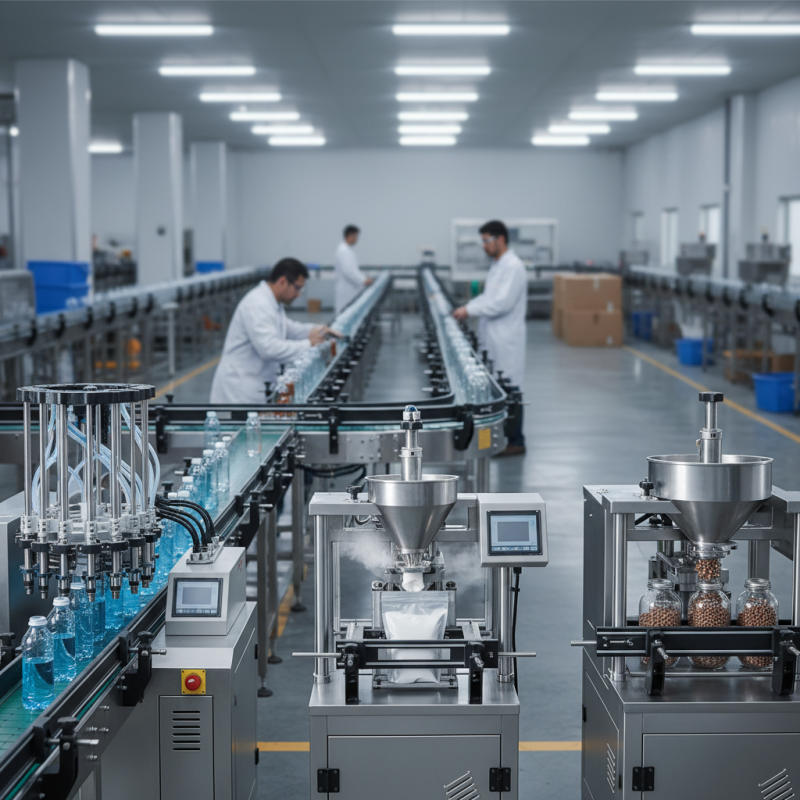
When it comes to filling machines, understanding the variation is crucial for your success.
There are several types, each serving different purposes.
Gravity fillers, for example, work well with thin liquids.
They rely on gravity to fill containers, ensuring accuracy for light products.
However, this type may not work as efficiently for thicker substances.
Piston fillers excel with thicker products, like creams or sauces.
These machines offer adjustable volumes, allowing for better precision. They can handle a variety of viscosities but may require more maintenance.
Auger fillers are another option, ideal for powders and granules.
They use a screw mechanism, but calibration can be tricky and errors can occur.
Every filling machine comes with its strengths and weaknesses.
An in-depth understanding of your product is essential. Each machine has a learning curve, leading to potential frustrations early on.
Consider factors like speed, product type, and maintenance needs.
Reflecting on these aspects will help you make a more informed decision, ensuring you choose the right equipment for your business.
Evaluating the Capacity and Speed Requirements for Your Production Line
Choosing the right filling machine is crucial for your production line's efficiency. Evaluating the capacity and speed requirements can significantly impact overall operational performance. Industry reports indicate that around 30% of manufacturers experience production delays due to inadequate machinery. Aligning machine speed with demand is essential.
To optimize production, assess your output needs. For example, if you require 1,000 units per day, a machine with a speed of 20 units per minute is ideal, allowing for a productive workflow. However, many businesses overlook fluctuation in demand. It's vital to factor in peak periods. A machine that struggles during high demand may cause bottlenecks.
Furthermore, consider the fill volume. Machines vary in their capabilities. A machine designed for higher volumes may not be necessary for smaller batches. An analysis by industry experts shows that 40% of companies invest in machinery that exceeds their current needs, leading to wasted resources. Always align equipment with realistic projections.
Filling Machine Capacity and Speed Comparison
Assessing the Types of Products You Plan to Fill
When selecting a filling machine, it’s crucial to evaluate the types of products you plan to fill. Different products require different filling techniques. For instance, liquids, powders, and granules each have specific needs. A thin liquid, like water, flows easily. Meanwhile, thick substances, like creams, need more robust mechanisms. Understanding these differences can prevent future production issues.
Consider the viscosity and density of your products. A filling machine must handle these variables efficiently. For thicker products, machines with auger fillers may be more suitable. These machines ensure precise dosages and maintain product integrity. Conversely, gravity fillers work better for thin liquids. The choice affects both quality and speed.
You may also reflect on the filling volume. Will you be filling small bottles or large containers? Machines vary greatly in capacity. Misjudging this can lead to inefficiencies. A machine that is too slow can impede growth. On the other hand, an overly complex system may not be necessary for smaller batches. Tailoring your choice to your specific needs is vital for success.
How to Choose the Best Filling Machine for Your Business?
| Product Type |
Filling Method |
Machine Type |
Production Speed (Bottles/min) |
Estimated Cost (USD) |
| Liquid |
Gravity Filling |
Semi-Automatic |
20 |
2,000 |
| Paste |
Piston Filling |
Fully Automatic |
40 |
15,000 |
| Powder |
Auger Filling |
Automatic |
30 |
10,000 |
| Granular |
Volumetric Filling |
Semi-Automatic |
25 |
5,000 |
| Aerosol |
Pressure Filling |
Automatic |
50 |
20,000 |
Considering Budget and Cost of Ownership for Filling Machines
When selecting a filling machine, budget considerations play a crucial role. Industry data shows that the average cost of a filling machine can range from $5,000 to over $100,000, depending on capacity, technology, and features. Smaller businesses may hesitate to invest heavily.
However, understanding long-term costs is essential.
A budget machine might save initial costs but can incur higher maintenance and operational expenses. Reports indicate that up to 20% of filling machine budgets may be consumed by ongoing operational costs. Lesser quality machines can lead to frequent downtime, affecting productivity and profitability.
It's also vital to factor in energy consumption and labor costs. Advanced machines often provide automation benefits. These machines can reduce labor costs by 30%, making them more appealing in the long run. Thus, investing wisely in a filling machine that balances initial cost with total cost of ownership can enhance overall business efficiency and profitability.