
How to Choose a Liquid Packaging Machine?
Choosing a liquid packaging machine is not simply a matter of comparing speed, price, or stainless-steel finishes. The right choice depends on product viscosity, container shape, filling accuracy, cleaning routines, and future production volume. A thin beverage behaves differently from honey, shampoo, or liquid medicine. Small details matter. A narrow nozzle may reduce dripping, while a servo-driven piston filler can improve consistency with thicker products.
Industry data shows why this decision deserves careful attention. PMMI’s 2024 State of the Industry report identifies continued investment in automation, labor efficiency, and flexible packaging equipment. Smithers also forecasts sustained global packaging growth through 2028, driven by convenience, sustainability, and changing consumer formats. These trends suggest that equipment should support tomorrow’s products, not only today’s production line.
Jorge Izquierdo, Vice President of Market Development at PMMI, has stated, “Automation is no longer an option; it is a necessity.” That view is useful, but it needs context. Automation can reduce repetitive labor and improve repeatability. It can also increase maintenance demands when the system is poorly matched to the product.
A reliable evaluation should include test filling, cleaning verification, changeover time, spare-parts access, and operator training. Ask suppliers to demonstrate your actual liquid, bottle, cap, and target speed. Do not accept impressive showroom results too quickly. A machine that fills 120 containers per minute may perform poorly with foam, sediment, or temperature changes. The best liquid packaging machine is the one that remains accurate, serviceable, and adaptable under real factory conditions.
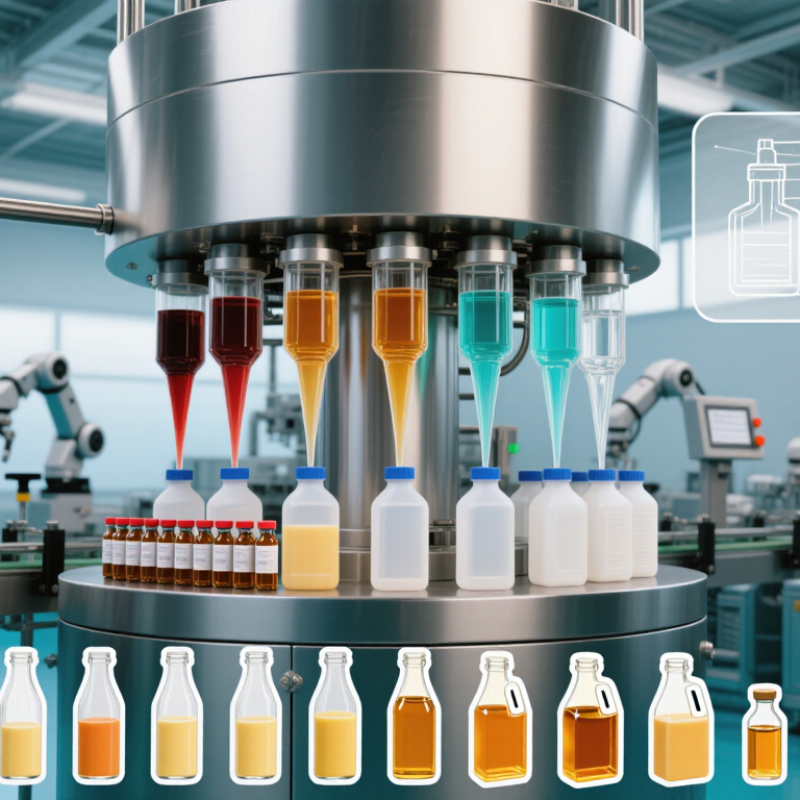
Classify the Liquid: Match Viscosity from 1 to 100,000 cP
How to Choose a Liquid Packaging Machine?
Classify the liquid before choosing a filling machine. Viscosity can range from 1 to 100,000 cP. Water-like liquids near 1 cP usually flow quickly through gravity or overflow fillers. Thicker products need positive-displacement pumps, such as gear, piston, or progressive cavity systems. Do not rely on viscosity alone. Temperature, shear sensitivity, particles, and foaming behavior also affect performance.
A 500 cP lotion may fill smoothly at room temperature but slow down in a cold production area. A 10,000 cP cream may require heated lines, wide valves, and stronger drive components. I have seen test samples behave differently after several minutes of pumping. That detail matters. Ask for a product trial using the actual container, cap, and target fill volume. Measure fill accuracy, drip control, cleaning time, and cycle speed.
Flow behavior can be imperfect. Some liquids thin during movement, while others resist sudden pressure changes. A single laboratory viscosity reading may not represent factory conditions. Request readings at different temperatures and shear rates when possible. Select a machine with adjustable speed and pressure control. Leave capacity for future changes, but avoid excessive oversizing. Oversized equipment may reduce accuracy and increase cleaning effort. The right choice matches the liquid’s real behavior, not only a number on a specification sheet.
| Viscosity Class | Typical Viscosity | Representative Liquids | Recommended Filling Technologies | Key Machine Selection Factors | Typical Packaging Applications |
|---|---|---|---|---|---|
| Water-like | 1–5 cP | Water: approximately 1 cP; ethanol: approximately 1.2 cP; skim milk: approximately 1.5–2 cP | Overflow filler, gravity filler, time-pressure filler, or low-pulsation peristaltic filler | High filling speed, anti-drip nozzles, foam control, and accurate liquid-level or volume control | Water, beverages, disinfectant solutions, liquid detergents, and other free-flowing liquids |
| Low viscosity | 5–100 cP | Light vegetable oils: commonly about 30–80 cP; thin sauces and low-viscosity personal-care liquids | Gear pump, peristaltic pump, piston filler, or time-pressure filler | Pump compatibility, suction-line design, product foaming, nozzle shutoff, and resistance to dripping | Cooking oils, syrups with low solids, liquid soaps, and cosmetic liquids |
| Medium-low viscosity | 100–1,000 cP | Thick cooking oils, liquid sauces, some lotions, and light emulsions | Gear pump, lobe pump, progressive cavity pump, or servo piston filler | Stable flow at the target speed, gentle product handling, pump clearance, and fill-volume accuracy | Sauces, dressings, liquid creams, industrial oils, and household-care products |
| Medium-high viscosity | 1,000–10,000 cP | Honey: often about 2,000–10,000 cP at room temperature; shampoo and thick liquid detergents | Servo piston filler, lobe pump, progressive cavity pump, or heated hopper with positive-displacement filling | Large product passages, slow and controlled filling, hopper agitation, suction capability, and temperature management | Honey, shampoo, conditioners, gels, thick sauces, and viscous cleaning products |
| High viscosity | 10,000–50,000 cP | Ketchup, concentrated sauces, thick creams, gels, and some cosmetic masks | Servo piston filler, progressive cavity pump, or low-shear lobe pump | Positive displacement, wide sanitary valves, anti-stringing nozzles, controlled back pressure, and optional heating | Ketchup, mayonnaise, cosmetic creams, pharmaceutical gels, and concentrated food products |
| Very high viscosity | 50,000–100,000 cP | Toothpaste-like products, dense cosmetic creams, thick ointments, and highly concentrated pastes | Heavy-duty servo piston filler, progressive cavity pump, or piston-assisted hopper system | Short product paths, oversized ports, hopper follower plate, anti-drip shutoff, low-shear operation, and possible heating | Toothpaste, ointments, dense creams, cosmetic masks, and semi-solid personal-care products |
Related Posts
-
2026 Best Filling Line Innovations and Trends to Watch?
-
2025 How to Choose the Best Vertical Packaging Machine for Your Business
-

7 Unique Benefits of Using a Pharmaceutical Filling Machine for Your Production流程
-
10 Essential Tips for Choosing the Best Pouching Machine for Your Business Needs
-

How to Choose the Right Cartoning Machine for Your Business?
-
Top 10 Food Packaging Machines You Need to Know About?