
Selecting the right Oil Offloading Pump is not simply a matter of choosing the highest flow rate. The pump must match the oil’s viscosity, temperature, transfer distance, and storage conditions. A poorly matched unit may cause pressure loss, slow unloading, seal damage, or unnecessary energy use.
Real operating experience shows that small details matter. A cold, heavy oil can move very differently from warm oil. Hose diameter, suction lift, valve design, and filtration also affect performance. Check the actual transfer environment, not only the supplier’s brochure. Numbers can mislead.
Safety remains essential.
This guide examines pump type, capacity, materials, motor options, maintenance access, and control requirements. It also explains how to compare centrifugal, gear, screw, and vane designs for different oil products. Reliable selection depends on verified specifications, documented testing, and advice from qualified engineers or manufacturers. Standards and site procedures should be reviewed before installation.
There is no universal pump.
Even experienced teams can overlook seasonal temperature changes or future production increases. That deserves careful reflection. A pump that performs well today may become inefficient after a pipeline extension or product change. Consider total ownership cost, including electricity, seals, downtime, cleaning, and spare parts. The best Oil Offloading Pump should provide stable transfer, predictable maintenance, and safe operation throughout its expected service life.
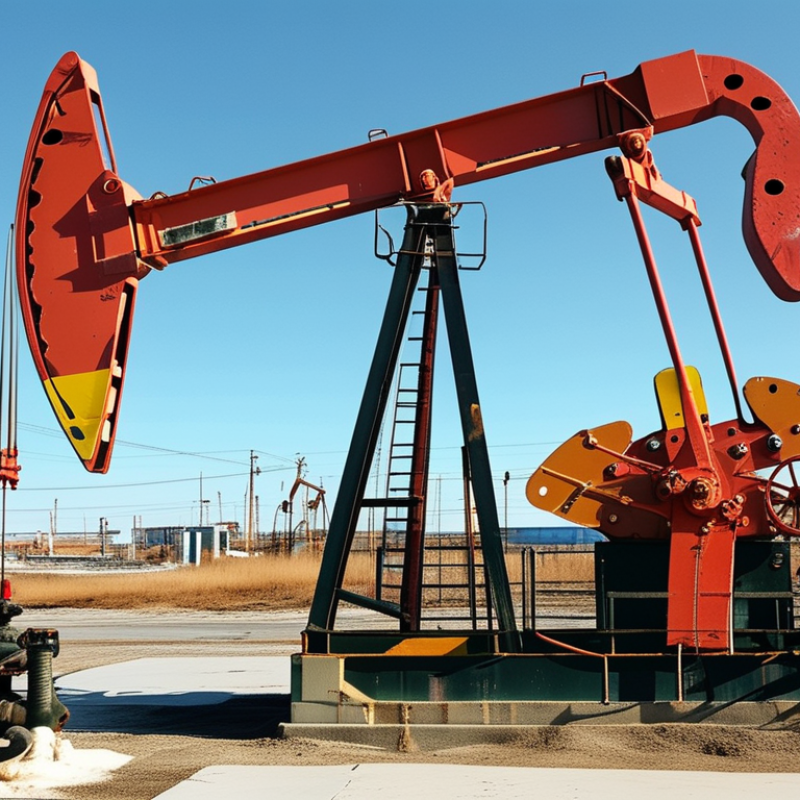
An oil offloading pump transfers liquid from a truck, vessel, or temporary tank into fixed storage. Its role is simple, but operating conditions are not. The pump must overcome static lift, pipe friction, valve losses, and changing tank levels. The U.S. Department of Energy identifies pumping systems as major industrial energy users, making efficiency a practical selection factor. Oversizing wastes power and may increase pressure shocks.
Centrifugal pumps use rotating impellers to create velocity and pressure. They suit stable flow, lower viscosity, and moderate pressure requirements.
Positive displacement pumps trap a known volume and move it during each cycle. They perform better with viscous oil and controlled metering.
Every pump still needs adequate net positive suction head. Poor suction conditions can cause vapor formation, vibration, and rapid damage.
Start with flow rate, viscosity, temperature, density, and required discharge pressure. Check hose length and internal diameter carefully. Small hoses can create surprising friction losses.
IEA’s Oil 2024 report forecasts global oil demand at 105.4 million barrels per day by 2030, highlighting the continuing need for dependable transfer equipment.
Yet demand alone should not dictate pump size. In field reviews, operators often select maximum capacity instead of normal capacity. That choice looks safe. It may be inefficient, unstable, and difficult to control.
A variable-speed drive can help, but only after the system curve is understood. Conservative assumptions still require verification.
How to Choose the Right Oil Offloading Pump?
Assess Oil Properties and Offloading Conditions
A suitable pump begins with accurate oil data, not a guess based on appearance. Measure viscosity, density, temperature, vapor pressure, and solids content. Heavy oil may move slowly through a narrow hose. Cold conditions can make it far more resistant to flow. Temperature changes matter.
Check whether the oil contains water, wax, or corrosive compounds. These factors affect pump materials, seals, and maintenance intervals. Review the required flow rate, discharge pressure, suction lift, hose length, and tank level. Long hoses and restrictive valves can create unexpected losses. A pump that works well in a test area may struggle during winter offloading. A neat calculation can still mislead.
Tips: Record the oil temperature during transfer, not only in the laboratory. Compare the pump curve with real operating conditions. Confirm the available power supply and emergency shutdown arrangement. Leave a reasonable capacity margin, but avoid excessive oversizing. An oversized pump may shear sensitive oil, consume more energy, and operate poorly at low flow. Ask operators about previous blockages and slow transfers. Their practical observations often reveal problems that specifications miss. Recheck the selection after a trial run.
How to Choose the Right Oil Offloading Pump?
Calculate the required flow rate before selecting a pump. Divide the oil volume by the planned unloading time. For example, transferring 120 m³ in two hours requires 60 m³/h. Add a practical margin, but avoid excessive oversizing. The U.S. Department of Energy identifies pumping systems as a significant share of industrial electricity use, often near 27% in manufacturing facilities. Efficient sizing directly affects operating cost.
Pressure calculations need more than tank height. Add static lift, pipe friction, valve losses, and the receiving tank’s pressure. Then convert the total pressure into pump head. Oil viscosity changes this result. Cold oil may require slower flow, larger piping, or a positive displacement design. API 610 provides widely used engineering guidance for centrifugal pumps in petroleum service, including operating limits and mechanical reliability. Check the pump curve at the real duty point.
NPSH matters.
Compare available NPSH with required NPSH, especially when the suction line is long or the oil is warm. The Hydraulic Institute recommends evaluating suction conditions carefully because vapor formation can damage performance and components. In field planning, a neat spreadsheet can still miss a blocked strainer or a partially closed valve. Recheck the calculation using actual temperature, density, viscosity, hose length, and elevation. A 10% capacity allowance may be reasonable, but it should be justified, not copied automatically.
Required flow rate, pressure differential, and selected pump capacity for typical oil-transfer duties
Choosing an oil offloading pump starts with the fluid, not the equipment catalogue. Measure viscosity, temperature, required flow, suction lift, and discharge distance. Centrifugal pumps suit thinner oils and steady, high-volume transfer. Positive displacement pumps handle thicker oils with controlled flow. They can be slower, but often deliver better results in cold conditions.
Material selection deserves equal attention. Use pump bodies and internal parts that resist the oil’s chemical properties and operating temperature. Seals must tolerate swelling, wear, and repeated starts. Stainless steel may improve corrosion resistance, while suitable coated steel can reduce cost. A common mistake is choosing materials from the oil name alone. Additives and cleaning fluids can change compatibility. Check a current chemical-resistance chart and confirm it with the supplier.
Power source affects safety and field performance. Electric motors provide clean, consistent operation where approved power is available. Hydraulic drives work well on mobile equipment and allow flexible speed control. Diesel engines can support remote sites, but they require ventilation, noise control, and careful fuel management. Grounding, bonding, emergency shutoff access, and area classification should be verified before installation. A pump may meet its rated flow yet perform poorly because of undersized hoses or clogged strainers. I would leave margin in the selection, then test the system under real temperature and load conditions. Specifications are useful. Real conditions are less polite.
How to Choose the Right Oil Offloading Pump?
An oil offloading pump should match the fluid, transfer distance, and daily operating hours. Start with safety features, not just flow rate. Look for emergency shutoff controls, leak-resistant seals, pressure relief protection, and grounding provisions. These details matter when hoses are connected near tanks, trucks, or uneven concrete surfaces. A clear pressure gauge also helps operators spot blockages before damage occurs. Confirm that the pump suits the oil’s viscosity and temperature range. A pump that struggles during cold mornings may waste energy and increase wear.
Maintenance needs often decide whether a pump remains dependable. Ask how quickly seals, filters, and hoses can be inspected or replaced. I prefer designs that allow access without removing half the assembly. That saves labor during a rushed service call. Still, even a well-designed pump can fail when inspections are skipped. This is easy to underestimate. Review the service schedule, spare-part availability, and technical support before purchase. Record vibration, unusual noise, and transfer time during normal operation.
Tips: Calculate total ownership cost over several years. Include electricity, maintenance labor, replacement parts, downtime, training, and disposal costs. A cheaper pump may become expensive after repeated seal failures. Request realistic performance data, not only ideal laboratory figures. Test the pump with your actual oil when possible. Also, leave room for honest uncertainty. Usage may change, and the original estimate may prove incomplete.
| Evaluation Dimension | Centrifugal Pump | Twin-Screw Pump | Progressive Cavity Pump | Selection Guidance |
|---|---|---|---|---|
| Typical oil service | Low- to medium-viscosity crude oil, diesel, fuel oil, and refined products | Crude oil, fuel oil, lubricating oil, and fluids containing small amounts of gas or solids | Viscous oils, emulsions, and fluids with limited solids content | Match the pump to viscosity at the lowest expected operating temperature, not only to the product name. |
| Typical flow range | Approximately 20–1,500 m³/h | Approximately 5–500 m³/h | Approximately 1–250 m³/h | Use the required unloading time, tank volume, hose diameter, and available receiving capacity to calculate the duty flow. |
| Typical differential pressure | Approximately 2–10 bar | Approximately 3–25 bar | Approximately 3–20 bar | Confirm the required total dynamic head, including static lift, pipe friction, valves, filters, meters, and truck or vessel connections. |
| Viscosity capability | Best suited to approximately 1–1,000 cSt; efficiency decreases as viscosity rises | Typically suitable from approximately 1 to 100,000 cSt, subject to speed and temperature | Typically suitable from approximately 100 to 100,000 cSt, subject to elastomer and speed selection | For heavy oil, consider heating, insulation, reduced speed, and a pump curve corrected for viscosity. |
| Flow control | Variable-speed drive or control valve; flow can change significantly with system pressure | Variable-speed drive provides accurate and repeatable flow control | Variable-speed drive provides good control, especially at low flow rates | Prefer speed control over excessive throttling when energy efficiency and meter accuracy are important. |
| Self-priming and suction behavior | Usually requires flooded suction or a dedicated priming system; sensitive to air entry and cavitation | Generally strong suction capability and better tolerance of entrained air | Good suction capability, but dry running can quickly damage the stator and rotor | Check NPSH available, suction-line losses, vapor pressure, and minimum tank level before final selection. |
| Metering accuracy potential | Moderate; affected by slip, viscosity, pressure, and operating point | High when operated with suitable speed control and a calibrated flow meter | Moderate to high; slip and elastomer wear must be monitored | Use an approved meter, grounding and bonding, temperature compensation where required, and a documented calibration program. |
| Key safety features | Pressure relief protection, mechanical seal monitoring, low-suction-pressure trip, emergency stop, and suitable motor protection | Integrated relief valve or external bypass, seal monitoring, high-pressure shutdown, emergency stop, and motor overload protection | Pressure relief valve, dry-run protection, low-level shutdown, emergency stop, and motor overload protection | For flammable liquids, specify certified equipment for the applicable hazardous area and install bonding, grounding, overfill protection, and leak containment. |
| Dry-running tolerance | Poor; seal and impeller damage can occur rapidly | Limited; depends on seal arrangement, speed, and pump design | Very poor; dry running can destroy elastomer components quickly | Install a reliable dry-run or low-flow shutdown and verify that the protection device is tested during commissioning. |
| Routine maintenance | Inspect seals, bearings, coupling, alignment, strainers, vibration, and motor condition | Inspect seals, bearings, timing gears, relief system, coupling, alignment, and vibration | Inspect rotor, stator, drive train, seals, coupling, and dry-run protection | Set inspection frequency by operating hours, starts, fluid contamination, vibration trend, and manufacturer recommendations. |
| Common wear parts | Mechanical seals, bearings, wear rings, gaskets, and coupling elements | Mechanical seals, bearings, timing gears, gaskets, and coupling elements | Stator, rotor, seals, universal joints, drive components, and gaskets | Compare spare-part lead times, local service capability, special tools, and labor hours before purchase. |
| Typical efficiency tendency | Often high at the best-efficiency point; efficiency falls at low flow or high viscosity | Often high across a broad operating range, particularly for viscous fluids | Good at low speed and high viscosity, but elastomer friction and wear affect efficiency | Evaluate annual kWh using the actual duty cycle, not only the motor nameplate rating. |
| Noise and vibration tendency | Usually low when operating near the best-efficiency point; cavitation can create severe noise and vibration | Generally steady, but gear mesh, pressure pulsation, or poor alignment can increase noise | Typically moderate; pulsation and worn universal joints may increase vibration | Specify vibration monitoring where continuous operation, personnel exposure, or sensitive metering equipment is involved. |
| Relative initial cost | Low to medium for standard high-flow installations | Medium to high due to precision components and controls | Medium; installation cost can rise with heating, flushing, or special materials | Include pump, motor, drive, baseplate, valves, instrumentation, hazardous-area certification, installation, and commissioning. |
| Relative total ownership cost | Often lowest for clean, low-viscosity fluid and stable high-flow duty | Often favorable for variable flow, viscous products, and accurate transfer requirements | Can be favorable for low-flow, high-viscosity service when stator and rotor life is well managed | Calculate five- to ten-year cost: purchase + installation + energy + planned maintenance + spare parts + downtime + disposal. |
| Best-fit application profile | Large-volume transfer with low viscosity, flooded suction, and relatively stable system conditions | Flexible offloading with variable viscosity, entrained gas, accurate flow control, or frequent product changes | Controlled transfer of viscous oil at modest flow rates where gentle handling is beneficial | Select the option with the lowest lifecycle risk, not simply the lowest purchase price. |