
A Plate Filter separates suspended solids from a liquid by passing a slurry through filter media held between rigid plates. In many designs, a pump feeds the mixture into closed chambers. Pressure pushes liquid through the cloth, while particles collect on its surface. The clarified liquid, called filtrate, exits through drainage channels. The retained solids gradually form a cake. It sounds simple. In practice, feed properties matter.
Particle size, viscosity, temperature, and solids concentration can change filtration speed and cake dryness. Plate material, cloth choice, operating pressure, and cycle time also affect results. Operators typically monitor pressure and filtrate clarity, then stop the cycle when flow slows or the target cake is reached. The cake is discharged, and the cloth may need inspection or cleaning before another run. Small details count. A worn cloth or uneven plate closure can cause leakage and inconsistent separation. Plate filters serve many industries, but no single setup suits every process. This guide explains the main components, operating sequence, common applications, and practical selection factors. It also shows where performance depends on testing rather than assumptions. A pilot trial can reveal how real feed samples behave, including details specifications may miss.
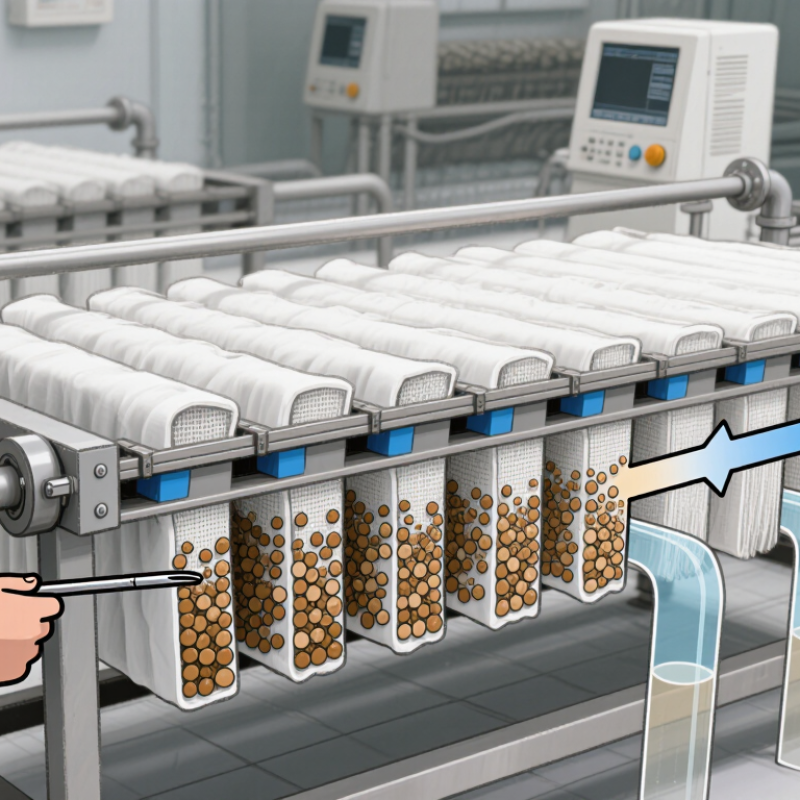
A plate filter is a pressure-driven device that separates suspended solids from a liquid. In a plate-and-frame or recessed-plate press, filter cloth covers the plates. A pump pushes slurry into the closed chambers. Liquid passes through the cloth and exits through drainage channels; particles remain behind and build into a cake. The distinction matters: dissolved salts and molecules generally pass through with the liquid. This is not a universal purifier.
The U.S. EPA’s Design Manual: Dewatering Municipal Wastewater Sludges reports filter-press cake solids of roughly 25–50% and solids capture of about 90–99% for sludge applications. These are reported ranges, not guarantees; feed material, cloth, pressure, and cycle time change the result.
A clear filtrate may still contain fine particles. The cake can also vary across one press. In practice, operators check the filtrate and weigh or sample the cake, rather than trusting pressure readings alone. It’s a useful check.
Plate filters suit slurries where capturing solids and recovering liquid both matter, but they do not separate every contaminant. The boundary is not always neat.
A plate filter is built around a stack of filter plates held firmly inside a supporting frame. The frame keeps the plates aligned and resists pressure during filtration. In many designs, a hydraulic closing system compresses the stack to limit leakage. Some smaller units use a different closing mechanism. The plates form shallow chambers, while filter cloth covers their surfaces. The cloth retains suspended solids as liquid passes through. A worn edge or poorly fitted cloth can allow particles to slip into the filtrate.
A feed channel carries slurry into the closed chambers. As the chambers fill, solids collect on the cloth and form a filter cake. Filtrate travels through grooves in the plates to discharge ports, then leaves through a collection manifold. Seals around plate edges help keep the feed and filtrate streams separate. Small details matter. A blocked outlet can slow drainage, while uneven plate alignment may cause drips. In practice, this part is less tidy than diagrams suggest: cloth condition and cake thickness can vary across one plate stack. After filtration, the plates open and the cake is removed before the next cycle.
In a plate filter, slurry enters a sealed stack of filter plates under pump pressure. Each plate pair forms a chamber lined with filter cloth. The liquid moves through the cloth, while suspended solids remain inside. A narrow stream of filtrate runs through drainage channels and exits through outlets.
The flow is not perfectly uniform. Thicker slurry may fill some chambers more slowly, and particles can begin forming a cake near the cloth surface. That cake becomes an added filtering layer. Useful, but not always predictable. Operators watch feed pressure and filtrate clarity; a sudden change can signal a blocked passage or uneven filling. Early filtrate may look slightly cloudy, depending on the cloth and the slurry.
As more solids collect, the cake grows and resistance rises. The pump must work against that resistance, so pressure should stay within the equipment’s rated limits. When the chambers are full or flow drops to the chosen endpoint, the feed stops. The plates open, and the damp cakes are removed. Small details matter: a poorly seated cloth can leak, and a cake that looks dry at the surface may still hold moisture inside.
Slurry enters the spaces between filter plates. Pressure pushes liquid through the filter cloth while suspended solids collect on the cloth, forming a filter cake. As the cake thickens, flow resistance rises and filtrate flow typically declines. The chart shows a representative, normalized profile—not guaranteed operating data; actual results depend on the slurry, cloth, pressure, and filter design.
Inside a plate filter, slurry enters chambers between cloth-covered plates. Pressure pushes liquid through the cloth, while suspended solids stay behind. The first particles form a thin layer; later particles collect on it. That layer is the filter cake. Not instantly. As it thickens, the cake itself becomes a finer filtering barrier, but also resists flow. The filtrate slows, even when the pump continues. The U.S. EPA’s 1987 Design Manual: Dewatering Municipal Wastewater Sludges gives pressure-filter cake solids of roughly 25–50%, depending on sludge and conditioning. That range is a guide, not a promise for every process.
When the target cycle ends, operators stop the feed and release pressure before separating the plates. Cake then falls into a collection bin or needs gentle scraping from the cloth. A wet, sticky cake may point to poor conditioning, short filtration time, or uneven feed. It is tempting to raise pressure, but that can compact some cakes and restrict drainage further. The cloth also matters: blinded pores can leave pale, wet patches on the cake face. Check cake thickness, texture, and filtrate clarity together. These simple observations help identify problems, though they do not replace process measurements.
| Stage | What Happens | How the Filter Cake Forms or Is Removed | Typical Operating Observation |
|---|---|---|---|
| 1. Plate closure | Filter plates are pressed together to create sealed chambers. Filter cloth is fitted over the drainage faces. | The cloth acts as the initial porous barrier that retains suspended solids while allowing liquid to pass through. | Plate alignment, cloth condition, and the sealing surfaces are checked before filling. |
| 2. Slurry feeding | A pump sends the solid–liquid mixture through feed openings into the plate chambers. | Liquid flows through the cloth and plate drainage channels. Suspended particles are retained and begin building a layer on the cloth. | Filtrate should discharge through the intended outlets; leaks at plate edges can indicate poor sealing or damaged cloth. |
| 3. Cake buildup | More solids accumulate in each chamber as filtration continues. | The retained particles form a porous filter cake. The cake itself becomes an additional filtering layer, trapping finer particles as liquid passes through it. | Filtrate flow commonly slows as the cake thickens and offers greater resistance to flow. |
| 4. End of filtration | Feeding stops when the chambers are filled or when the specified cycle endpoint is reached. | The chambers contain a cake layer between the cloth-covered plate faces. Cake thickness and moisture depend on the slurry, cloth, pressure, and cycle settings. | Operators may use the filtration rate, feed pressure, cycle time, or filtrate clarity as process indicators. |
| 5. Optional cake washing or drying | Where the process requires it, wash liquid or compressed air may be passed through the cake before opening. | Washing can displace soluble material from the cake; air blowing can remove some remaining liquid. These steps are process-dependent. | Wash quality and final cake moisture depend on material properties and the selected cycle. |
| 6. Plate opening and cake discharge | After pressure is safely released, the plate pack is opened and the cakes are discharged, typically by gravity or with a mechanical plate-shifting system. | Cake separates from the cloth and falls or is removed from the chamber. Any material remaining on the cloth may require cleaning. | The press must be depressurized before opening; complete discharge helps maintain consistent filtration in the next cycle. |
| 7. Cloth inspection and next cycle | The cloth and plate faces are inspected, and the press is closed for another batch. | Removing residual solids helps prevent blinding, in which particles obstruct cloth openings and reduce drainage. | Cleaning frequency depends on the slurry and operating results; damaged or blinded cloth can impair filtration. |
Note: A plate filter press separates solids from liquid in batches. Actual cycle conditions and cake characteristics vary with the feed material, filter cloth, plate design, and process requirements.
Plate filters separate solids from liquids by pressing slurry through filter cloth held between plates. The basic idea is simple. The design changes how the cake forms, how easily it releases, and how much moisture remains.
Recessed-chamber designs are common in wastewater treatment, mineral processing, and chemical production. Their hollow plates create chambers where solids collect as filtrate passes through the cloth. A plate-and-frame design uses separate frames between flat plates, allowing operators to adjust chamber thickness. This can suit small batches or processes that need flexible cake capacity.
Membrane plates add a flexible surface that squeezes the cake after filtration, helping reduce leftover liquid. That extra step can save drying time, though it adds equipment and operating complexity.
Some filters use vertical plates for compact layouts, while horizontal designs may suit larger, continuous operations. The right choice depends on slurry behavior, cleaning needs, and whether the cake must be dry or easy to remove.
In practice, the labels are not always used consistently. That distinction matters. A tidy specification sheet may not reflect changing feed solids or cloth wear. Testing a representative sample can reveal whether the cake cracks, sticks, or drains slowly—details that are easy to miss during selection.