
A Power Distribution Cabinet is not just a metal enclosure with breakers. It is the point where load capacity, protection, access, and future expansion meet. A poor fit can mean crowded wiring, awkward maintenance, or costly changes after installation. The details matter.
The International Energy Agency’s Electricity 2024 report states that global electricity demand grew 2.2% in 2023 and projects average annual growth of 3.4% from 2024 through 2026. That broader pressure makes careful distribution planning more important, though it does not tell buyers which cabinet to choose. Site conditions do. Check the actual load, available fault current, ambient temperature, ingress protection needs, and space for cable bends. Then verify ratings and documentation with qualified electrical professionals. Small omissions can become expensive.
Electrical educator Mike Holt’s safety reminder is apt: “Electricity is unforgiving. It must be respected.” Use it as a buying principle, not a substitute for engineering review. Compare busbar ratings, protective-device coordination, enclosure construction, labeling, and service access against the project specification. Ask suppliers to clarify exclusions in writing. A polished datasheet can still leave gaps. I have seen specifications look complete until someone checks the room layout and finds no sensible path for cable entry. That is easy to overlook. This guide presents 10 practical buying tips to help teams ask sharper questions, compare proposals consistently, and avoid choices based on price alone.
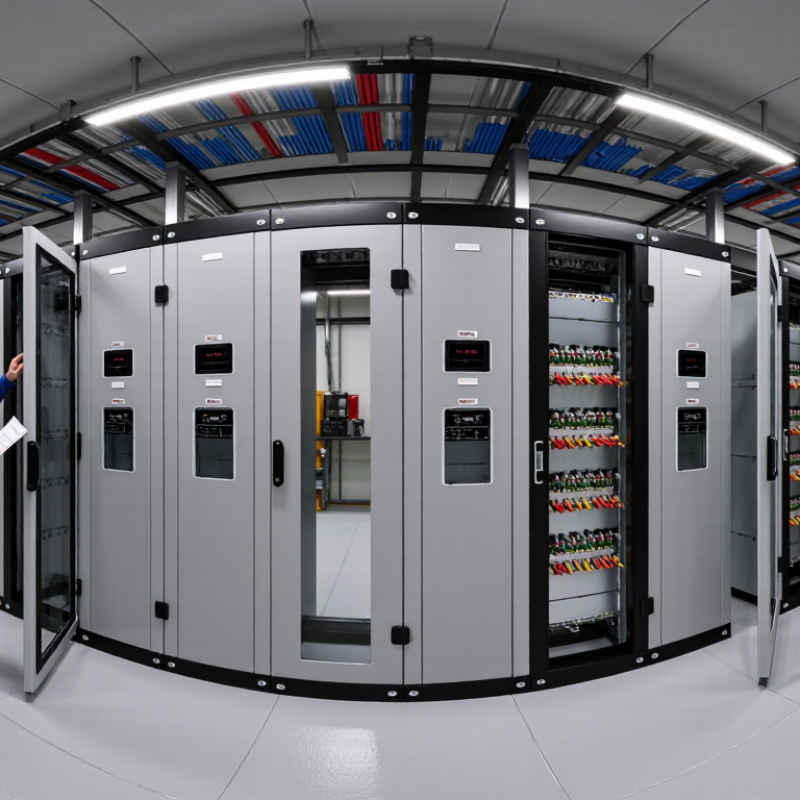
A power distribution cabinet is the controlled handoff point between an incoming supply and the circuits serving equipment, lighting, or production lines. Its job is more than housing breakers. It must safely distribute current, isolate faults, and allow technicians to inspect components without blocking nearby work areas.
The U.S. Energy Information Administration reports that roughly 5% of electricity is lost during transmission and distribution. That figure covers the wider grid, not an individual cabinet, but it shows why sound distribution design matters.
Before buying, map the actual loads: record voltage, phase, rated current, starting surges, and which circuits must remain available during maintenance. Then check the prospective short-circuit current against the cabinet’s and protective devices’ ratings. Leave practical space for future circuits, but do not treat spare capacity as a substitute for a proper load calculation. A tidy spreadsheet can still miss a motor’s startup demand. It happens. Note the installation setting, too: dust, moisture, heat, cable-entry direction, and the clearance needed to open doors and replace components. The right cabinet is the one that fits the electrical duty and the room—not merely the one with the most empty slots.
Before choosing a power distribution cabinet, build a load schedule from equipment nameplates and actual operating patterns. Record each circuit’s voltage, phase, rated current, and expected running time. A workshop with several machines may have a high total nameplate load, but not every machine runs at once. Use realistic demand estimates, and have a qualified electrical professional verify the calculations. Guessing can leave little margin.
Tip: List planned equipment, not just installed equipment. Include motors, heaters, lighting, and control systems. Check cabinet ratings against the calculated load, site conditions, and applicable electrical requirements. Small details matter.
Plan for expansion with a measured reserve, rather than choosing the largest cabinet available. Consider likely additions over the next few years, such as another production line or charging equipment. Allow space for extra breakers, wiring, and safe cable routing. A cabinet can have spare circuit positions yet still lack thermal capacity or room for proper bend radii. Review these limits before ordering. Forecasts are imperfect; revisit them when the facility’s equipment or operating schedule changes.
| # | Buying Tip | What to Check | Practical Example or Planning Measure |
|---|---|---|---|
| 1 | Build a complete load schedule | List each load’s voltage, phase, rated current or power, operating hours, and whether it is continuous or intermittent. | Separate single-phase and three-phase loads, and record motor starting requirements rather than relying only on average consumption. |
| 2 | Calculate the connected load | For three-phase systems, use the appropriate line voltage and load current. For balanced loads, apparent power is approximately √3 × line voltage × line current. | At 400 V three-phase and 100 A, apparent power is about 69.3 kVA. This is an example calculation, not a recommended cabinet rating. |
| 3 | Apply demand and continuous-load rules correctly | Use applicable electrical-code demand factors and continuous-load requirements for the installation location and load type. | Do not assume every connected load runs at full load simultaneously, but do not reduce the design load without a justified, code-compliant demand calculation. |
| 4 | Choose an appropriate busbar and cabinet rating | Confirm rated voltage, phase, frequency, rated current, and permitted operating conditions for the complete assembly. | Check the manufacturer’s rating data for ambient temperature, enclosure conditions, and any applicable derating before selecting the rating. |
| 5 | Verify short-circuit withstand capability | Compare the cabinet’s short-circuit rating with the prospective fault current at its point of installation. | The assembly rating must be suitable for the available fault current and the specified upstream protective device, in accordance with applicable standards. |
| 6 | Allow for future load growth | Estimate planned additions such as machinery, HVAC equipment, chargers, or new production lines. | A 20–30% planning allowance is sometimes used as a preliminary target, but the appropriate margin depends on the project forecast, code, and utility constraints. |
| 7 | Reserve usable outgoing ways | Check the number and type of spare breaker positions, spaces for future equipment, and whether the busbar supports the intended additions. | Keep spare ways compatible with the planned circuit ratings; an empty position alone does not guarantee sufficient electrical capacity. |
| 8 | Check breaker coordination and selectivity | Review protective-device ratings, trip curves, interrupting capacity, and coordination with upstream and downstream devices. | Ask for a protection study where required so a fault can be isolated appropriately without unnecessary interruption to other circuits. |
| 9 | Match the enclosure to the environment | Specify suitable ingress protection or enclosure classification for dust, moisture, corrosion, temperature, and installation location. | Choose the enclosure based on actual indoor or outdoor exposure and local requirements; a higher protection level may affect heat dissipation. |
| 10 | Plan for heat, access, and maintenance | Confirm ventilation or heat-management needs, working clearances, cable entry space, labeling, and safe access for inspection. | Follow applicable installation clearances and manufacturer instructions, and leave enough cable and equipment space for safe maintenance and future changes. |
Note: Final cabinet sizing, protection settings, fault-current checks, and installation details should be verified by a qualified electrical professional against the applicable local codes and project specifications.
When selecting a power distribution cabinet, start with the installation conditions, not the catalogue photograph. An indoor electrical room may stay clean and dry, while a workshop can bring oil mist, metal dust, and vibration. Outdoor locations add wind-driven rain, sunlight, temperature swings, and possible standing water. Rain finds gaps.
Choose enclosure material and ingress protection to match those exposures and the equipment inside. A sealed cabinet can limit dust and moisture, but it may also trap heat. Check ambient temperature, component heat output, ventilation needs, and clearance around the cabinet. In corrosive or washdown areas, confirm that coatings, seals, hinges, and fasteners suit the cleaning agents and exposure. Dust settles everywhere.
Think through installation details before ordering. Measure the doorway, mounting surface, cable entry points, and space needed to open doors safely. A cabinet that fits on paper may block a walkway once conduits and handles are installed. Confirm the enclosure rating against site conditions and project requirements with a qualified electrical professional. A low cable gland facing spray is a small oversight, but it can create avoidable maintenance work. It is worth checking twice; drawings can look more complete than the site.
A power distribution cabinet should arrive with safety evidence that matches its exact configuration, not just a reassuring label.
Ask for the applicable test reports, certificate number, issuing body, and product model. Check that the documents cover the cabinet’s voltage, current rating, fault-current rating, and installed options. A certificate for a similar enclosure may not apply to the assembled unit. Labels can mislead.
Confirm which standards apply in the cabinet’s intended market. For example, IEC 61439 or UL 891 may be relevant, depending on equipment type and local requirements. Verify the standard edition and whether the evaluation covers the complete assembly.
Inspect practical details too: grounding points, door bonding, barriers around live parts, and the stated ingress-protection rating. Ask how the short-circuit rating was established. Request clear instructions for safe isolation and maintenance.
If documentation is vague, pause before ordering. A supplier may have a valid certificate, yet still leave unanswered questions about a custom busbar or added breaker. That gap deserves attention, even when the cabinet looks well finished. Keep the evidence with the purchase record, and compare nameplate details against the approved drawings before installation.
When comparing power distribution cabinet suppliers, look beyond the quoted price. Ask for itemized costs covering the cabinet, protective devices, testing, delivery, and commissioning. A quote that omits wiring checks or site support may look attractive but create extra work later.
Check each supplier’s experience with your voltage level, load profile, and installation environment. Request clear drawings, component specifications, and realistic delivery dates. References from similar facilities can help, though one positive reference is not proof of consistent service. That matters. Compare how quickly suppliers answer technical questions, too.
Read the warranty terms carefully. Note its duration, coverage for parts and labor, response times, and exclusions for improper installation or harsh conditions. Read exclusions. Confirm who handles troubleshooting and replacement parts after commissioning. Then estimate total ownership costs over the cabinet’s expected service life: inspections, maintenance, spare parts, energy losses, and possible downtime. A slightly higher purchase price may be worthwhile if support is dependable and components are easier to replace. Still, cost estimates involve assumptions; site conditions can change them. Record those assumptions before comparing offers.