
7 Tips for Choosing a Chocolate Processing Plant?

Choosing the right Chocolate Processing Plant can shape product quality, production costs, and long-term business stability. A polished brochure is not enough. Buyers should examine processing capacity, equipment design, hygiene controls, energy use, and after-sales support. The best decision usually begins with clear product goals, such as dark chocolate bars, filled pieces, or finely refined couverture.

Look closely at the details. Can the plant maintain stable temperatures during conching and tempering? Are stainless steel surfaces easy to clean? Does the supplier provide documented testing, operator training, spare parts, and realistic delivery schedules? These questions reveal more than impressive photographs. Independent certifications and verified customer references can also support a reliable assessment, but they should not replace an on-site inspection. Ask for production samples. Watch the machinery operate. Small details matter.

A practical evaluation should also consider future expansion. A plant that fits today’s output may restrict tomorrow’s growth. Modular equipment can offer flexibility, although it may require higher initial investment. Cost alone can mislead. I have seen buyers focus heavily on the purchase price and overlook maintenance delays, inconsistent emulsification, or difficult software support. That mistake is easy to repeat.

There is no perfect supplier. Trade-offs remain. Yet careful comparison can reduce avoidable risks. The following seven tips explain how to assess technical performance, food safety, supplier credibility, customization options, operating costs, and service quality before choosing a Chocolate Processing Plant. Take notes. Challenge assumptions. Your final choice should be based on evidence, not promises.
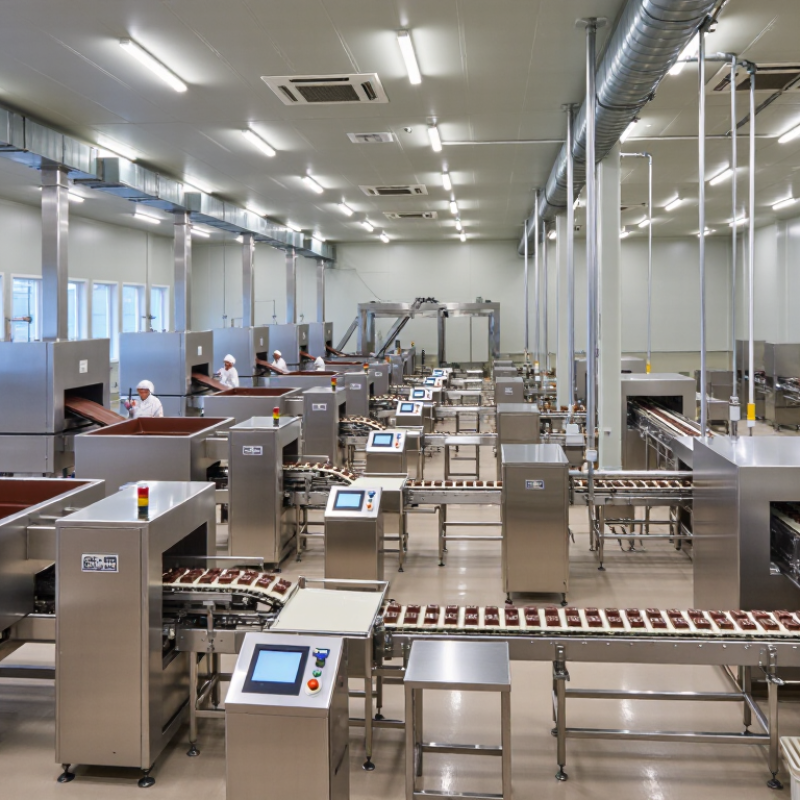
7 Tips for Choosing a Chocolate Processing Plant?

Define Product Scope Using ICCO’s 2023/24 4.9 Mt Grinding Forecast

7 Tips for Choosing a Chocolate Processing Plant

ICCO’s 2023/24 forecast places global cocoa grinding near 4.9 million tonnes. Use this figure as market context, not as a guaranteed sales forecast. Define your product scope before comparing equipment. Will the plant process cocoa liquor, cocoa butter, cocoa powder, or finished chocolate? Each product requires different refining, pressing, grinding, and quality-control systems. Keep the scope specific. Vague plans often create expensive capacity gaps.

Match plant capacity to realistic supply volumes, not optimistic targets. Check bean storage, cleaning, roasting, winnowing, and grinding rates separately. A line may claim high throughput, yet bottlenecks can appear at tempering or packaging. Request measured output data under similar cocoa conditions. Ask about energy use, water demand, spare parts, and maintenance access. Small details matter. Inspect hygienic design, dust control, temperature monitoring, and traceability records. These features support consistent flavor and safer production.

Review flexibility before signing a specification. Different origins, fat levels, and particle sizes can change processing performance. Confirm whether the plant handles seasonal variation without excessive downtime. Evaluate operator training, commissioning support, and emergency procedures. I would also test sample batches before final approval. Forecasts can shift, and my own planning mistake would be trusting volume estimates too quickly. A smaller, adaptable plant may outperform a larger system when demand remains uncertain. Reference checks should include actual users, service response times, and documented performance results.

7 Tips for Choosing a Chocolate Processing Plant

Define Product Scope Using ICCO’s 2023/24 4.9 Mt Grinding Forecast

The ICCO’s 2023/24 forecast places global cocoa bean grindings at approximately 4.9 million tonnes. Regional planning volumes help define the required plant scope, including bean cleaning, roasting, grinding, pressing, powder processing, and cocoa butter handling. Values are rounded and may not sum exactly because of rounding.

Source: International Cocoa Organization (ICCO), 2023/24 cocoa year grinding forecast; regional figures shown in million tonnes and rounded for planning use.

Calculate Throughput with 24/7 Operation and an 85% OEE Target

Choosing a chocolate processing plant requires more than checking its maximum hourly output. A 24/7 schedule provides 168 scheduled hours each week. At an 85% OEE target, only 142.8 effective production hours are available. OEE combines availability, performance, and quality losses. Do not subtract the same losses twice.

For example, a plant needing 10,000 kilograms weekly requires about 70 kilograms per effective hour. This figure should reflect the complete process, including refining, conching, tempering, molding, cooling, and packing. Seasonal demand may require a higher rate. Leave capacity for recipe changes, cleaning, maintenance, and minor stoppages. A line running at its limit is fragile.

The calculation looks simple. Reality is messier. Ask for verified production records, not only rated capacity. Review OEE data from comparable chocolate recipes and package sizes. A thick filling may reduce performance, while frequent allergen changeovers can reduce availability. Check whether the 85% target is measured across the whole line or only one machine. In plant trials, small cooling delays often become large weekly losses. I would also test a slower operating speed, because stable quality can matter more than an impressive brochure number.

Check Refining and Conching Against 20–30 μm Particle-Size Specs

7 Tips for Choosing a Chocolate Processing Plant?

A good quotation is not enough. Ask for a particle-size method, sampling plan, and recent production records. The target is usually 20–30 μm for a smooth eating profile. Yet, the number needs context. Laser diffraction and sieve results are not interchangeable. Require the method, dispersion medium, D50, and D90 values. Request three batch results, not one polished sample. The International Cocoa Organization’s 2023/24 annual reporting places global cocoa grindings near 4.8 million tonnes. That scale makes repeatable process control commercially important, not cosmetic.

Tip:

Watch refining first. Inspect the roll refiner, gap adjustment, cooling, and feed consistency. A 25 μm average can conceal oversized particles. Ask operators to show the largest-particle trend. Then test chocolate after conching, because moisture, viscosity, and agglomeration can shift mouthfeel. Conching should improve flavor and dispersion, not simply extend running time. A plant claiming “fine” chocolate without time-temperature curves offers too little evidence. Research by Afoakwa and colleagues in the Journal of Food Engineering links particle size with rheology and sensory texture. Use that relationship during trials.

Tip:

Run a witnessed acceptance test. Measure incoming liquor, refined mass, and finished chocolate. Record temperature, residence time, moisture, and viscosity beside each result. ISO 22000-based validation supports documented monitoring and corrective action. Still, challenge your assumptions. One clean laboratory result may not represent Monday’s night shift. Ask for variation data, maintenance history, and a retained sample from an ordinary production day.

Verify HACCP, Codex CXS 87-1981, and EU Cadmium Limits

Choosing a chocolate processing plant requires more than inspecting stainless-steel tanks. Ask for recent HACCP verification records, corrective-action logs, and staff training evidence. A clean factory can still hide weak controls.

Check compliance with Codex CXS 87-1981 for chocolate composition, cocoa ingredients, and labeling practices. Request batch specifications, allergen controls, and calibrated temperature records. The Codex standard is useful, but it does not replace national law. That distinction matters.

Cadmium testing deserves close attention. European Commission Regulation (EU) 2023/915 sets maximum levels for cadmium in cocoa and chocolate products. Dark chocolate containing over 50% cocoa generally faces a 0.80 mg/kg limit, while cocoa powder sold to consumers has a 0.60 mg/kg limit. Confirm the exact category before approving a supplier. Ask whether testing uses validated ICP-MS methods and independent laboratories. One test is not enough.

The International Cocoa Organization reported 2023/24 world cocoa production at about 4.8 million tonnes. Large volumes increase pressure on sourcing, storage, and traceability systems. Inspect how the plant separates higher-cadmium lots and records origin data. A factory should show trends, not only passing certificates.

I would also review water activity, refining temperature, metal detection, and recall drills. These details reveal operational experience. Some suppliers may present incomplete records. That is a warning, not a minor inconvenience.

Do not rely on paperwork alone. Walk the floor. Sample the evidence.

7 Tips for Choosing a Chocolate Processing Plant: Verify HACCP, Codex CXS 87-1981, and EU Cadmium Limits

A practical due-diligence checklist for evaluating food safety, product conformity, contamination control, traceability, and technical capability before selecting a chocolate processing plant.

Tip Evaluation Dimension What to Verify Evidence or Data to Request Recommended Acceptance Criteria Reference
1 HACCP system and prerequisite programs Confirm that the plant has a documented HACCP plan covering receiving, storage, roasting or treatment where applicable, refining, conching, tempering, moulding, cooling, packaging, and dispatch. Request the current hazard analysis, process flow diagram, list of critical control points, critical limits, monitoring records, corrective-action records, verification records, sanitation procedures, pest-control records, and allergen-control program. The HACCP plan should be product- and process-specific, reviewed after process changes, supported by prerequisite programs, and implemented through complete, legible, and retrievable records. Codex CXC 1-1969, General Principles of Food Hygiene and HACCP System
2 HACCP validation and verification Determine whether the plant can demonstrate that its preventive controls are scientifically justified and routinely checked for effectiveness. Review validation studies, internal audit reports, calibration certificates, environmental monitoring results, finished-product testing, complaint investigations, mock recalls, and management-review records. Critical limits must be measurable or observable, monitoring must occur at defined frequencies, deviations must trigger documented corrective action, and verification activities must be independent of routine monitoring where practical. Codex CXC 1-1969 HACCP principles 5–7
3 Conformity with Codex CXS 87-1981 Check whether the plant’s product specifications and labels align with the Codex Standard for Chocolate and Chocolate Products. Request product specifications showing product name, cocoa ingredients, milk ingredients where relevant, permitted ingredients and additives, moisture or composition criteria where applicable, packaging information, and lot identification. The selected chocolate category should be clearly defined, the formulation should match the declared product name, and the plant should maintain a controlled process for reviewing changes to Codex, national, and importing-country requirements. Codex CXS 87-1981, Standard for Chocolate and Chocolate Products
4 EU cadmium compliance Verify that the plant manages cadmium in cocoa beans, cocoa mass, cocoa powder, and chocolate according to the finished-product category and cocoa content. Request recent representative laboratory results, raw-material risk assessments, supplier specifications, sampling plans, nonconformance records, and a calculation showing how the recipe and cocoa ingredients meet the applicable maximum level. For products placed on the EU market, the applicable maximum levels include:
• Chocolate containing up to 30% total cocoa solids: 0.10 mg/kg
• Chocolate containing 30% to less than 50% total cocoa solids, and milk chocolate containing 30% or more total cocoa solids: 0.30 mg/kg
• Chocolate containing 50% or more total cocoa solids: 0.80 mg/kg
• Cocoa powder sold to the final consumer: 0.60 mg/kg
Regulation (EU) 2023/915, Annex I, maximum levels for cadmium in food
5 Raw-material control and supplier approval Assess how the plant controls cocoa beans, cocoa mass, cocoa butter, cocoa powder, milk ingredients, nuts, emulsifiers, flavors, and packaging materials. Review approved-supplier lists, incoming inspection procedures, certificates of analysis, origin and lot records, allergen declarations, storage conditions, stock-rotation records, and supplier-performance reviews. Each critical ingredient should be traceable to a supplier lot. Risk-based testing should address relevant hazards, including cadmium, Salmonella risk in low-moisture ingredients, allergens, foreign material, and pesticide or contaminant requirements where applicable. Codex CXC 1-1969; Regulation (EU) 2023/915
6 Process capability and hygienic design Inspect equipment and process controls for refining, conching, tempering, moulding, cooling, metal detection, packaging, and cleaning. Request process-capability data, temperature and time records, preventive-maintenance logs, cleaning validation, allergen changeover procedures, foreign-material controls, metal-detector checks, and calibration records. Equipment should be cleanable, maintained, and suitable for food contact. The plant should control temperature, time, moisture, foreign material, cross-contact, rework, and product segregation using documented procedures. Codex CXC 1-1969, hygienic practices and control measures
7 Traceability, recall readiness, and laboratory competence Test whether the plant can trace materials forward and finished products backward, isolate affected lots, and execute a rapid recall. Request a recent mock-recall report, one-step-back and one-step-forward traceability records, retention-sample procedures, complaint trends, laboratory accreditation details, analytical methods, detection limits, and chain-of-custody records. The plant should identify affected lots, quantities, customers, ingredients, and processing dates without ambiguity. Cadmium testing should use a validated method and a competent laboratory; results should be interpreted against the correct legal product category. Codex CXC 1-1969; ISO/IEC 17025 principles; Regulation (EU) 2023/915
Important: EU cadmium limits depend on the legally defined product category and cocoa content. Confirm the current consolidated EU legislation, applicable national requirements, sampling rules, and the exact product formulation before commercial release.

Compare Energy, Logistics, and Payback Through a 5-Year TCO Model

7 Tips for Choosing a Chocolate Processing Plant?
Compare Energy, Logistics, and Payback Through a 5-Year TCO Model

A low purchase price rarely tells the full story. Build a five-year total cost of ownership model before comparing proposals. Record expected output, operating hours, energy tariffs, labor rates, maintenance, spare parts, freight, installation, and financing. Keep the assumptions visible. Hidden assumptions create expensive surprises.

Measure energy per kilogram of finished chocolate, not just motor power. Request tested figures at your planned production rate. Check heating, cooling, compressed air, and cleaning demand separately. Examine local logistics, including container access, inland transport, customs handling, and delivery delays. A cheaper machine may need costly site modifications. It happens often.

Estimate maintenance hours and replacement-part lead times. Ask for service records from comparable installations. Review automation carefully, because reduced labor may increase software dependency. Include operator training and shift coverage in the model.

Calculate payback from realistic cash flow, not optimistic capacity. Use conservative utilization during the first year. Add a reserve for downtime and energy-price changes. Test three scenarios: expected, weak, and strong performance. A five-year model should show annual cash cost, cumulative savings, and the month when investment recovery occurs. Do not force the numbers to look attractive. A spreadsheet can still be wrong when production assumptions are stale. Validate key inputs with plant operators, maintenance technicians, and logistics providers. Recheck the model after receiving firm utility data and installation quotations.