China Top Oil Tank Manufacturers for Global Buyers
Global energy infrastructure is expanding, and storage capacity remains central to reliable supply. The International Energy Agency’s Oil 2024 report projects global oil demand will reach 105.4 million barrels per day by 2030. That growth increases pressure on terminals, refineries, ports, and industrial facilities to use safer, more adaptable storage systems.
An Oil Tank is not simply a large steel container. Its design affects product integrity, maintenance costs, loading speed, and environmental protection. Buyers must examine plate quality, welding procedures, corrosion allowances, roof design, coating systems, inspection records, and after-sales support. API 650 is widely used for welded storage tanks, while local fire, environmental, and pressure regulations may add further requirements.
China has become an important sourcing base for fabricated storage equipment. Its manufacturers often provide engineering, production, surface treatment, automation, and installation coordination under one supply chain. This can shorten procurement time, but supplier quality varies. A factory photograph is not proof of capability.
The OPEC World Oil Outlook 2024 also anticipates long-term oil demand growth, reaching about 116 million barrels per day by 2045. These figures suggest continued investment in storage infrastructure, although forecasts can change with energy-transition policies and market conditions.
This guide reviews China’s leading Oil Tank manufacturers for global buyers. It considers production experience, certifications, engineering depth, material traceability, export performance, and communication reliability. No ranking is perfect. Buyers should still verify drawings, inspection plans, references, and delivery records before signing contracts. The best supplier is not always the cheapest. It is the one that performs consistently in real operating conditions.
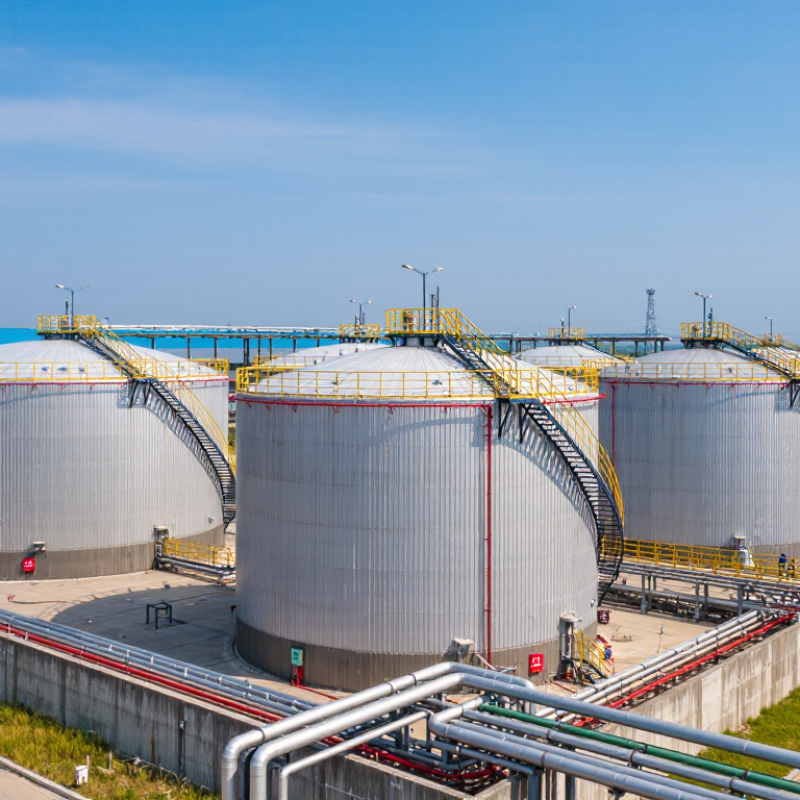
China’s Oil Tank Manufacturing Market: Capacity, Output, and Export Data
China’s oil tank manufacturing market is supported by strong domestic demand. The National Bureau of Statistics reported 208.9 million tonnes of crude oil production in 2023. China Customs recorded crude oil imports of about 564 million tonnes that year. These flows require large storage networks near ports, refineries, and inland terminals.
However, national oil-tank capacity and tank-only output are not published as separate official indicators. This is an important data limitation. World Steel Association data shows China produced about 1.02 billion tonnes of crude steel in 2023, supporting a deep supply base for fabricated steel equipment. For export analysis, UN Comtrade’s HS 730900 code is useful. It covers iron or steel reservoirs and tanks above 300 litres, but it also includes non-oil equipment. Export figures therefore indicate manufacturing scale, not exact oil-tank shipments. Buyers should inspect customs descriptions carefully.
Tips: Ask suppliers for plate certificates, welding procedures, hydrostatic-test records, and coating specifications. Confirm whether reported capacity means workshop capacity or proven annual output. A factory may claim high capacity, yet its visible yard and lifting equipment suggest otherwise. Request recent shipment evidence, inspection reports, and drawings before comparing prices. Conditions vary. Data can mislead.
Oil Tank Types and Capacities: From 1,000 m³ to 100,000 m³ Storage
For global buyers comparing China’s oil tank manufacturers, capacity should guide the entire project. A 1,000 m³ tank suits regional depots, blending facilities, and moderate fuel demand. Larger terminals often use tanks from 5,000 m³ to 30,000 m³. High-volume storage may require units reaching 100,000 m³.
Tank type must match the stored oil and local conditions. Fixed-roof tanks are practical for many stable products and smaller capacities. Internal or external floating roofs can reduce vapor loss in larger tanks. Horizontal tanks support compact layouts, while vertical tanks use land more efficiently. A larger tank is not automatically better. It may require deeper foundations, stronger wind resistance, and more complex emergency planning.
Experienced buyers should request design calculations, material certificates, welding procedures, and non-destructive testing records. Hydrostatic testing, coating inspection, and dimensional checks also matter before shipment. Common engineering references include API 650 or EN 14015, but local regulations remain decisive. Seismic zones, coastal humidity, temperature changes, and soil bearing capacity can alter the final specification. Ask for corrosion allowance details. This is easy to overlook. Manufacturing quality depends on traceable steel, qualified welders, controlled assembly, and clear inspection points. Some projects still underestimate drainage and access platforms. That mistake can increase maintenance costs later.
Material, Welding, and Safety Standards for Global Oil Tank Buyers
China’s leading oil tank manufacturers usually offer carbon steel, stainless steel, and coated steel designs. The correct material depends on oil type, temperature, pressure, and storage duration. Carbon steel suits many general storage applications. Stainless steel can improve corrosion resistance, but it raises the project cost. Material certificates should identify the steel grade, heat number, thickness, and testing results.
Welding quality deserves close attention. Buyers should request approved welding procedures, welder qualification records, and inspection reports. Visual checks can find surface defects, but they cannot reveal every internal problem. Ultrasonic or radiographic testing may be required for critical welds. Strong manufacturers also maintain weld maps and full traceability. Details matter.
Safety features should match the site risk. Tanks may require overfill protection, pressure-vacuum vents, grounding, leak detection, and secondary containment. Fire protection must follow the project’s local requirements. Common design references include API 650, EN 14015, and ISO welding standards, but the applicable rules depend on location and tank service. Do not guess.
A factory audit can reveal more than a polished quotation. Check plate storage, welding areas, coating control, calibration records, and final inspection practices. Ask how the manufacturer handles design changes. One small drawing revision can create a costly mismatch. No checklist is perfect. Site conditions are often underestimated, especially drainage, wind exposure, and foundation settlement. Experienced buyers review these points with an independent engineer before production.
China Top Oil Tank Manufacturers for Global Buyers
Material, welding, and safety standards are key factors when evaluating oil tank manufacturers for international projects. The chart compares the minimum yield strength of representative carbon-steel plate grades commonly specified for aboveground storage tank fabrication.
How to Read the Chart
Higher minimum yield strength can support thinner or more heavily loaded components, but final material selection must also consider tank diameter, operating temperature, corrosion allowance, seismic loads, and design code requirements.
Relevant international references: API 650 for welded aboveground storage tanks, AWS D1.1 for structural steel welding practices, and ASME Section IX for welding procedure and welder qualification. Actual values may vary with plate thickness and the applicable edition of each standard.