
China’s digital printing sector is drawing attention from packaging converters, commercial print houses, and textile manufacturers. A Digital Printer may promise fast changeovers and shorter production runs, but supplier quality depends on more than machine speed. Print consistency, service coverage, spare-parts access, and application support matter on the factory floor.
Smithers’ report, The Future of Digital Printing to 2032, estimated the global digital print market at $136.7 billion in 2022 and forecast $230.5 billion by 2032. This points to sustained demand, though the figures cover the global market—not Chinese suppliers alone. That distinction matters. Market growth does not prove that every manufacturer offers the same engineering depth or after-sales service.
This guide compares Chinese suppliers through practical criteria: product range, documented technical specifications, export experience, and evidence of customer support. Buyers should verify claims with sample prints, production tests, and direct reference checks. A catalog is not enough. Nor is a low quotation, by itself, evidence of long-term value. Supplier rankings can also shift as technology and service networks change; this comparison should be treated as a starting point, not a final purchasing decision. Some details remain difficult to judge from public information alone. That deserves a closer look.
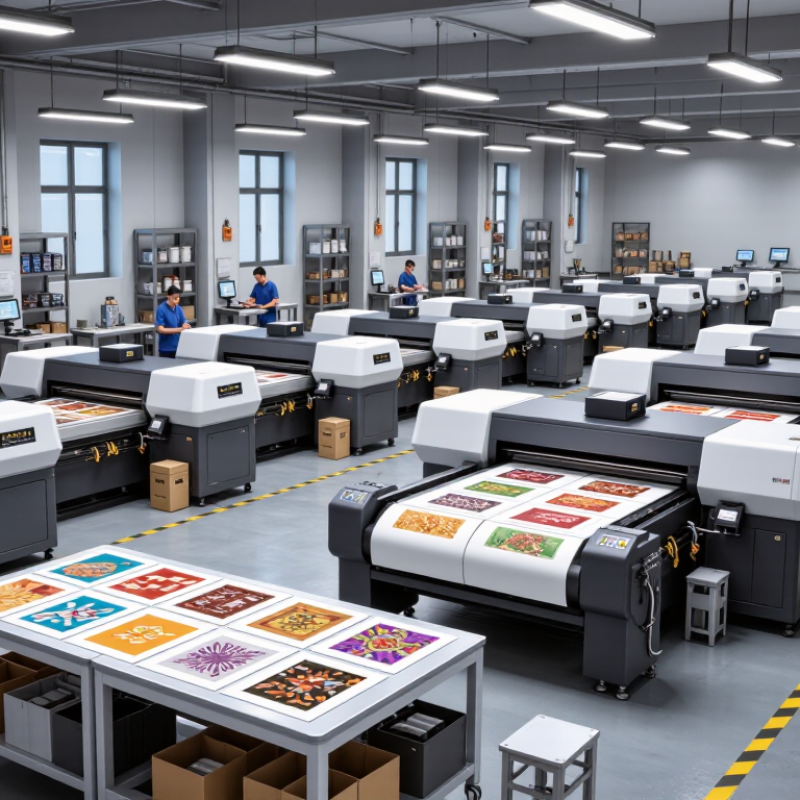
China’s digital printing supplier market includes equipment makers, production partners, and specialist integrators. Suppliers often focus on UV flatbed, roll-to-roll, textile, or label applications. Their strengths vary: one may offer fast machine customization, while another provides stronger installation and maintenance support. Smithers’ report The Future of Digital Print to 2028 estimates that global digital print value will rise from $167.5 billion in 2023 to $251.1 billion in 2028. This is global data, not a China-only forecast, but it signals expanding demand for short runs and customized output. The market is broad.
For buyers, supplier comparisons should go beyond print speed and advertised resolution. Ask to test your actual material, artwork, and finishing workflow. Check color consistency across repeated jobs, local technician availability, spare-part lead times, and training details. A machine can look impressive in a showroom. Daily production is less tidy. Supplier claims may not reflect the performance you get with your own inks, substrates, and operators, so document test results before ordering.
Tips: Request a sample run on your material and inspect fine text, gradients, and curing. Confirm the warranty scope and service response times in writing. A lower purchase price may cost more if downtime stretches for days.
Digital printing suppliers in China serve several production needs, but their machines differ more than catalogs suggest. Inkjet systems are common in wide-format graphics, labels, textiles, and packaging. UV-curable ink hardens under lamps and can print on rigid boards, acrylic, or coated metal. Eco-solvent systems suit outdoor graphics, while aqueous models often serve posters and indoor displays. Small details matter.
Textile production uses direct-to-fabric or transfer workflows, with different pretreatment, drying, and color requirements. For garment panels, test fabric stretch and wash resistance, not just the bright showroom sample. Digital toner presses are another category, often used for short-run brochures, manuals, and variable-data jobs. They can reduce setup time, though paper choice and finishing still shape the result. Not always simple.
When comparing suppliers, request samples on your own material and inspect fine lines, gradients, adhesion, and repeatability. A swatch may look excellent once, yet drift during a long run if calibration or humidity changes. I would not treat one demonstration as proof of production reliability; buyers sometimes overlook maintenance access and operator training. The best-fit category depends on volume, substrate, finish, and acceptable waste—not merely headline speed.
Typical maximum media-width benchmarks across common digital printer categories (metres). These are illustrative format references, not supplier rankings; specifications vary by model.
Digital printer suppliers commonly serve label, commercial sheetfed, textile, flatbed UV, and superwide-format applications. Compare individual machine specifications when evaluating suppliers.
Chinese digital printer suppliers often build expertise around specific production needs rather than every printing format. Some focus on UV flatbed systems for rigid materials, such as acrylic panels, wood sheets, and display boards. Buyers should ask about printhead configuration, supported material thickness, and curing performance. A sample print can reveal banding or uneven color more clearly than a brochure.
Other suppliers specialize in roll-to-roll equipment for banners, labels, and flexible films. Textile-focused manufacturers may offer sublimation systems designed for polyester fabric, with attention to ink control and drying speed. These differences matter. A fast machine is not always the best fit for a workshop with limited floor space or changing job sizes.
Supplier capabilities can vary by region and factory, so location alone is a weak measure of quality. Request a live demonstration using your own material, then inspect fine text, gradients, and edge sharpness. Ask for written details on maintenance intervals, spare-part availability, and operator training. Small gaps matter. I would also verify claimed output speeds under comparable print settings; advertised figures can be difficult to compare directly.
Choosing among digital printer suppliers in China requires more than comparing machine speed or asking for the lowest quote. Check whether the supplier can explain printhead maintenance, ink compatibility, and realistic output limits in plain terms. Ask for a live demonstration using your own material, then inspect fine text, color consistency, and drying after handling. One clean sample proves little. A longer run reveals more.
Tips: Request a written service response time, spare-parts list, warranty scope, and operator training plan. Ask for references from customers with similar production needs, and verify them directly where possible.
Reliability also depends on what happens after delivery. Clarify who installs the machine, how remote troubleshooting works, and whether common replacement parts are stocked locally. Ask for maintenance logs or uptime data, but check how those figures were measured. A polished showroom demo cannot predict every factory condition. It is tempting to rank suppliers by a single test score; that can miss support quality and operating costs. Treat the test as a starting point, not proof, and record any unanswered questions before comparing quotations.
| Comparison Dimension | What to Compare | Evidence to Request | How to Assess Reliability |
|---|---|---|---|
| Application and material compatibility | Supported print applications, substrates, media thickness or roll width, and any required pretreatment or curing process. | A written compatibility list and test prints made using the buyer’s actual material. | Confirm the supplier has tested the exact material and intended use; do not rely on a broad “compatible” claim alone. |
| Print speed and production capacity | Rated speed at the specified print mode, resolution, pass count, and production conditions. | A timed production demonstration and a written specification stating the mode and test conditions. | Compare like-for-like modes. Draft or maximum speed is not the same as sustained throughput at saleable print quality. |
| Print quality and consistency | Color accuracy, banding, registration, fine detail, repeatability, and performance across the print width. | Buyer-approved samples, repeat prints, and color-measurement results where color tolerances matter. | Evaluate several consecutive prints under the same settings, rather than a single prepared sample. |
| Ink and consumables | Supported ink types, consumption assumptions, shelf life, storage requirements, and availability of compatible consumables. | Ink technical and safety documentation, recommended storage conditions, and a written consumables price list. | Check total operating costs and supply continuity. Confirm warranty terms for third-party consumables in writing. |
| Machine build and quality control | Assembly controls, calibration, inspection procedures, component traceability, and final run testing. | A quality-control checklist, sample inspection records, and a live factory or pre-shipment inspection. | Look for documented, repeatable checks—not only verbal assurances or photographs of the production floor. |
| Service and technical support | Support hours, response channels, remote troubleshooting, installation, operator training, and availability of local service. | A written service plan, training scope, escalation contacts, and clearly defined response targets. | Ask who provides support in the destination country and whether service commitments are included in the contract. |
| Spare parts and downtime planning | Availability of commonly replaced parts, ordering process, shipment options, and recommended on-site spares. | A parts list with part numbers, prices, lead-time estimates, and warranty coverage. | Verify lead times and identify parts that could stop production if unavailable; avoid relying on an unspecified “lifetime supply” promise. |
| Warranty and acceptance terms | Warranty duration, covered components, exclusions, repair process, and conditions for installation and use. | A complete warranty document and purchase-contract acceptance criteria. | Check how warranty claims are handled across borders and distinguish parts coverage from labor, travel, and shipping costs. |
| Safety and regulatory documentation | Electrical, mechanical, chemical, and emissions requirements applicable to the machine and destination market. | Relevant declarations, test reports, safety data sheets, and documentation for the exact model being offered. | Verify document scope and model numbers with the relevant authorities or an independent compliance specialist when needed. |
| Delivery and installation | Production lead time, packing, shipping responsibilities, installation requirements, and commissioning schedule. | A delivery schedule, packing details, installation checklist, and a clearly stated shipping term in the contract. | Clarify who handles freight, customs, unloading, site preparation, and commissioning before placing an order. |
| Supplier track record and transparency | Relevant export experience, customer references for similar applications, and consistency between sales claims and documentation. | Verifiable references, a detailed quotation, and a factory or production audit where appropriate. | Check references independently and ensure the contracting entity, machine specifications, and payment terms are clearly identified. |
Comparison note: No supplier ranking is implied. Supplier performance depends on the printer type, application, material, operating environment, and service region. Compare written specifications and test results for the same requirements before making a decision.
Choosing a digital printer supplier starts with the work the machine must do. Specify your materials, print widths, average daily volume, color requirements, and finishing steps. Then ask suppliers to run your own files on your actual substrate. A sharp sample on coated paper proves little about performance on textured stock. Request measured color consistency, production speed, setup time, and waste figures. Small details matter.
Industry forecasts can provide context, but check what each report measures. Smithers’ The Future of Digital Printing to 2027 estimates the market will grow from $136.7 billion in 2022 to $167.5 billion in 2027. Grand View Research valued the digital printing market at $35.5 billion in 2023 and forecast 6.7% annual growth through 2030. These figures use different market definitions, so they should not be compared directly.
For supplier checks, review documented machine specifications, operator training, spare-parts availability, and response times. Ask for service terms in writing, including which components are covered and how quickly support is available. A low purchase price can hide costly downtime. One easy mistake: trusting a polished demonstration without testing routine jobs. Ask for references from buyers with similar materials and workloads, and confirm the supplier can explain limitations plainly.