Top Shrink Film Manufacturers in China
Choosing a reliable Shrink Film manufacturer in China involves more than comparing prices. Buyers need to consider film type, thickness, shrink performance, printing options, and production consistency. China’s packaging sector includes large factories and specialized suppliers, so capabilities can vary widely. This guide introduces manufacturers and the practical details that help buyers assess them.
A useful comparison looks beyond polished product photos. Ask about resin options, roll width, thickness tolerance, sealing behavior, and compatibility with your packaging equipment. Request technical data and recent samples. Then test the film on your own line, where heat settings and machine speed can reveal problems that a brochure may not mention. Small details matter. A roll that wrinkles, seals poorly, or shrinks unevenly can slow packing work. No supplier is perfect. Even a strong sample may not represent every production batch, so repeat checks are sensible. Buyers should also review quality-control procedures, customization capacity, lead times, and communication practices. These points do not guarantee a smooth order, but they make comparisons more grounded. The manufacturers featured here are presented as candidates to investigate, not as a universal ranking for every application. Requirements differ between food packaging, consumer goods, and industrial uses. A careful shortlist, followed by clear specifications and sample testing, is a practical place to begin. It may take longer than choosing the lowest quote. That extra care is often worthwhile.
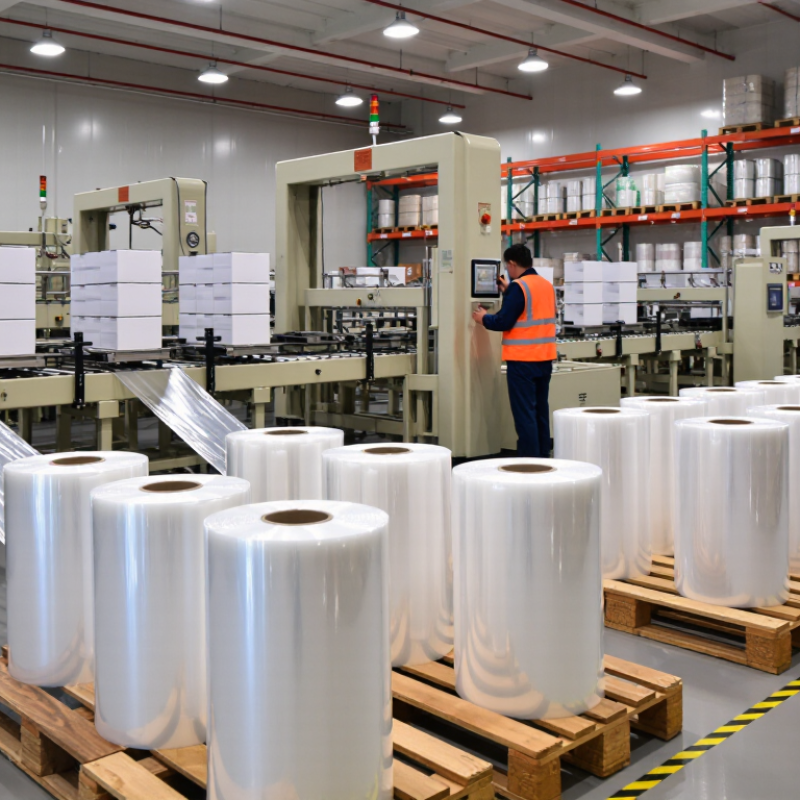
Shrink Film: Materials, Properties, and Packaging Uses
Shrink film is a thermoplastic packaging material that tightens around a product when heated. Common options include polyolefin, polyethylene, and PVC, each with different handling and performance characteristics. Polyolefin often offers clear presentation and neat seals for retail packs. Polyethylene is tougher and suits heavier multipacks. Film thickness, seal quality, and shrink direction all affect the final fit. A bottle’s edges should sit smoothly beneath the film, not pull it thin.
The right choice depends on the product and packing line. A snack tray may need close conformity and clear visibility, while bundled cartons need more puncture resistance. Heat settings matter: too little heat leaves wrinkles; too much can distort the pack or weaken seals. Small trial runs help reveal these problems. They do not guarantee perfect results.
Packaging also has a waste footprint. The OECD’s 2022 Global Plastics Outlook reported that packaging represented about 40% of global plastic waste generated in 2019. That figure makes film weight and end-of-life planning hard to ignore. Thinner film can reduce material use, but only if it still protects the load through storage and transport. Shrink film is convenient, not automatically sustainable; local collection and recycling options vary, and mixed packaging can complicate sorting.
China’s Shrink Film Industry and Manufacturing Landscape
China’s shrink film industry sits within a broad plastics manufacturing base. The National Bureau of Statistics reported 74.885 million tonnes of plastic products in China in 2023, down 3.9% year on year. The figure covers many product types, not shrink film alone. Treating it as shrink-film output would overstate precision. The scale is striking.
Manufacturers serve food, beverage, household goods, and logistics customers. Production often combines resin sourcing, extrusion, printing, slitting, and quality checks. Buyers typically compare film thickness, shrink performance, seal strength, clarity, and roll consistency. A clear test is practical: wrap a representative carton, then check corners, seams, and label visibility after heating. Regional suppliers can offer short lead times, but capabilities vary between factories. That detail deserves verification. Industry growth does not guarantee uniform process control.
Tips: Request a technical data sheet and recent test results. Confirm film gauge across the roll, not just at one point. Ask how the supplier handles recycled content and production scrap, since cost and performance can shift together. These questions help distinguish a capable converter from a basic film reseller.
Criteria for Evaluating Shrink Film Manufacturers
When evaluating shrink film manufacturers in China, begin with the packaging line, not the sales brochure. Match film type and thickness to the product’s weight, shape, and surface. A thin bottle label and a heavy tray need different performance. Check shrink ratio, seal strength, puncture resistance, and clarity. Ask for technical data sheets and test conditions, since a figure without its method is hard to compare. Request samples from more than one production batch. Small variations matter.
Run trials on your own equipment. Note tunnel temperature, line speed, seal quality, and wrinkles around corners. A sample can look excellent on a bench and behave differently at production speed. That matters. Ask how the factory checks thickness and tracks batches, and whether it can share inspection records. Confirm realistic lead times, sample turnaround, and how changes to a specification are documented. Clear answers are useful evidence; vague promises are not. Sustainability claims also deserve scrutiny: request measurable details, not just reassuring language. Even a careful assessment has limits, and a brief trial may not reveal every seasonal or batch variation.
Profiles of Leading Shrink Film Manufacturers in China
Profiles of Leading Shrink Film Manufacturers in China
China’s shrink film sector includes several distinct manufacturer profiles. Large integrated producers combine resin sourcing, extrusion, printing, and slitting under one roof. This can support consistent supply for high-volume packaging lines. Specialist converters, by contrast, focus on multilayer structures, printed designs, or films for irregular product shapes. Export-oriented factories may offer English-language documentation and sample rolls, but service quality still varies. A factory visit or production trial can reveal more than a polished catalogue.
When comparing suppliers, ask about film thickness tolerance, sealing performance, shrink ratio, and roll-to-roll consistency. Request a technical data sheet and test the film on your own equipment. The OECD’s Global Plastics Outlook (2022) identifies packaging as the largest source of plastic waste, at 40% of total plastic waste in 2019. That figure is not specific to shrink film, but it underlines why material efficiency and clear end-of-life information matter. Supplier claims deserve careful checking.
Tips: Compare samples under the same temperature and line-speed settings. Check whether the stated shrink rate matches your product geometry. A small trial may expose wrinkles, weak seals, or uneven shrinking. It is easy to overlook these details when reviewing prices alone.
Comparing Product Quality, Certifications, and Export Capabilities
Comparing China’s shrink film manufacturers requires more than checking thickness and price. Request lot-specific test reports for gauge tolerance, tensile strength, elongation, and shrink performance. ASTM D882 measures tensile properties of thin plastic sheeting; ASTM D1709 evaluates dart-impact resistance. These tests help buyers compare results under consistent methods, though they do not replace trials on actual packaging lines. A reliable supplier should provide traceable batch records and explain any variation between samples and production rolls.
Certifications are useful, but their scope matters. Verify the issuing body, site address, expiry date, and products covered by each certificate. ISO 9001 indicates a quality-management system, not proof that every roll meets your specification.
OECD’s 2022 Global Plastics Outlook reports that packaging accounted for 40% of plastic waste in 2019. This makes material efficiency and clear recyclability information relevant purchasing checks, alongside seal strength and clarity.
Export readiness also shows in practical details: consistent roll winding, moisture-resistant packing, accurate labels, and responsive handling of shipping documents.
Tips: Ask for a recent certificate of analysis and test a production roll on your own line. Check records. A perfect sample can still hide inconsistent batches, so compare results across multiple lots before committing.