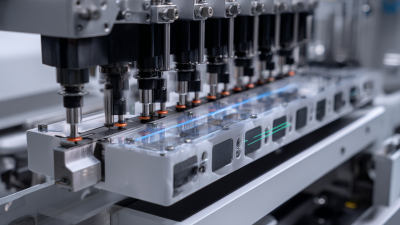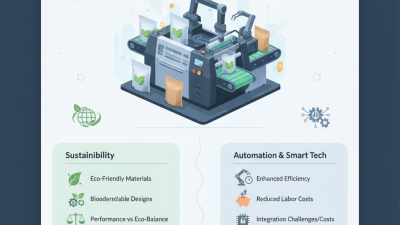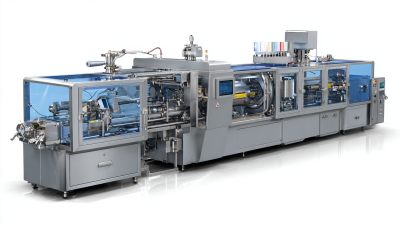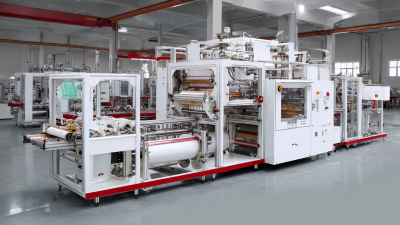
Buying a pouching machine is a production decision, not a simple equipment purchase. A shiny frame can hide weak sealing control, difficult changeovers, or costly spare parts. Global buyers must examine the complete operating picture.
Packaging machinery consultant Lisa McTigue Pierce offers a useful reminder: “The best machine is not always the fastest machine; it is the one that performs reliably every day.” That principle matters on a real factory floor. Operators may handle film rolls before sunrise, switch pouch sizes after lunch, and clean sealing jaws before the next shift. Small delays can become large losses.
This guide presents ten practical buying tips for selecting a pouching machine across international markets. It considers pouch materials, filling accuracy, sealing performance, speed, automation, operator training, maintenance, and after-sales support. It also addresses voltage requirements, documentation, installation, and communication with overseas suppliers.
Do not trust impressive numbers alone. Test the actual film. Inspect sample seals. Ask how quickly worn parts can arrive. Request a factory acceptance test, even when the schedule feels tight. That extra step may expose an uncomfortable weakness before shipment.
A few assumptions may still prove wrong. Product behavior changes with humidity, temperature, and operator experience. Therefore, buyers should compare measured trial results instead of relying only on brochures. The right pouching machine should fit the product, workforce, facility, and long-term service plan. Reliability is the real purchase.
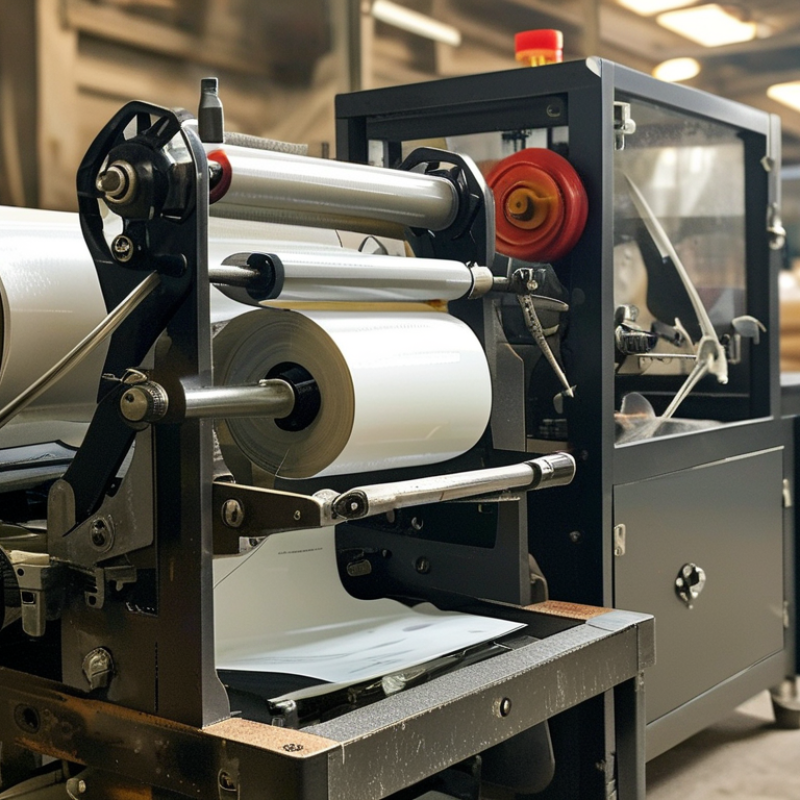
Pouch format should follow the product, not the sales brochure.
Pillow and three-side-seal pouches suit dry powders, grains, and small portions. Stand-up pouches need stronger bottom forming and accurate zipper placement. Spouted pouches require controlled liquid filling and careful seal inspection. For very small doses, stick-pack equipment can reduce material waste, but it may limit future format changes.
Vertical form-fill-seal machines often fit granular products and high-volume operations. Horizontal machines can handle delicate products and preformed pouch designs more gently. Premade-pouch systems offer better presentation, yet they usually require higher labor and pouch-handling precision.
According to Grand View Research, the flexible packaging market reached about USD 201.8 billion in 2023 and may grow at 4.1% annually through 2030. That growth does not justify buying excess capacity.
Match the machine to density, flowability, viscosity, and oxygen sensitivity. A powder may bridge inside a hopper, while a thick sauce can stretch the seal area. Check actual output, not the headline speed.
PMMI’s 2024 Packaging Machinery report highlights labor efficiency, automation, and flexible changeovers as major investment priorities.
Ask for a product trial using your film, filling weight, and target seal temperature. Measure waste, changeover time, seal strength, and real OEE.
The fastest machine can still be the wrong machine.
I would leave room for uncertainty, because products and pouch designs often change before the equipment is fully depreciated.
Capacity planning starts with demand, not the pouching machine’s maximum speed. Rated output often assumes ideal film, stable products, and zero changeovers. Real lines behave differently. The OEE Foundation uses 85% as a world-class benchmark, while many manufacturing plants operate near 60%. Use actual OEE from comparable products whenever possible.
For example, a machine rated at 120 pouches per minute, running 16 hours daily at 72% OEE, produces about 82,944 pouches. If daily demand is 69,000 pouches, the line holds roughly 20% headroom. That buffer covers minor stoppages, cleaning, operator relief, and seasonal orders. Do not treat it as unlimited capacity. A difficult film structure can reduce throughput quickly.
The 2024 MHI Annual Industry Report found that 55% of supply-chain leaders planned to increase technology investment. That signals stronger automation demand, but investment alone does not solve poor scheduling. Ask suppliers for verified throughput, average changeover time, reject rates, and OEE data from similar pouch formats. Then model 15–25% demand headroom above the forecast. I would not accept a single factory trial as proof. Trial conditions can be unusually clean. Your production floor probably will not be.
When buying a pouching machine, seal quality deserves more than a visual inspection. ASTM F88 measures seal strength through controlled peel testing. It reports force per unit width, usually in N/15 mm or N/25 mm. Strong seals are not always better. Excessive heat can distort films, damage products, or create brittle seal edges.
ASTM F1929 adds another layer. It uses a dye solution to detect channels in porous or nonporous seals. A tiny blue line beside the seal may reveal a leak path that operators cannot see. Test samples should represent real production conditions, including machine speed, dwell time, jaw pressure, film structure, and filling contamination. Testing only empty laboratory pouches is convenient. It is also incomplete.
Smithers’ 2024 flexible-packaging market outlook places global demand above US$250 billion, increasing pressure for stable, repeatable pouch production. PMMI’s 2023 packaging trends research also identifies quality control and automation as major investment priorities. These reports support a practical buying question: can the machine maintain ASTM-based performance across shifts, operators, and material batches? Request F88 strength curves, F1929 dye-test records, and sampling plans from the supplier. Review failures, not only averages. A machine may pass one trial and still struggle during a long run. That uncomfortable gap deserves attention.
When buying a pouching machine, compare automation by measurable tasks, not attractive screen graphics. A servo-driven infeed can stabilize pouch spacing and reduce operator intervention. Yet full automation is not always the best answer. It may increase maintenance skill requirements and spare-parts costs. PMMI’s 2024 State of the Industry report projected U.S. packaging machinery shipments at about $11.3 billion in 2024. This growth reflects continued investment, but it does not prove that every factory needs maximum automation.
Tip: Request a filmed changeover test using your pouch sizes, film materials, and sealing temperatures. Record the time from the final accepted pouch to the first stable production run. Include cleaning, recipe loading, jaw adjustment, and quality checks. A supplier’s “ten-minute changeover” may exclude these steps. That is where comparisons become unreliable. Measure errors, not only minutes.
IEC 60204-1 compliance should be checked through technical documents and witnessed inspection. Ask for the electrical schematic, protective bonding test records, emergency-stop validation, enclosure ratings, and control-circuit details. Confirm that the machine’s risk assessment matches the installed configuration. IEC 60204-1 supports electrical equipment safety, but it does not replace local installation rules or a complete machinery risk assessment. Interact Analysis has reported continued automation investment across packaging equipment, driven by labor pressure and production flexibility. Still, I would not accept automation claims without production data. A practical audit may reveal that a simpler machine performs better during night-shift operation.
Buying a pouching machine is not only a capacity decision. Global buyers should request a documented risk assessment based on ISO 12100 and relevant machine-safety requirements. Check guarding, emergency stops, electrical protection, and access points during a live demonstration. Ask for test records, conformity documents, wiring diagrams, manuals, and software backups in clear English. Missing documents can delay installation more than a weak production rate.
Energy data needs practical boundaries. Request kilowatt-hours per 1,000 pouches, with film type, speed, seal temperature, and compressed-air pressure recorded. The International Energy Agency reports that motor-driven systems consume roughly 45% of global electricity. The U.S. Department of Energy also identifies motor systems as a major share of industrial electricity use. Small efficiency differences become expensive across three shifts. Compare measured results, not optimistic brochures.
After-sales support should be tested before payment. Confirm response times, remote diagnostics, technician availability, spare-part lead times, and operator training. Keep a critical-parts list with prices and replacement intervals. A useful contract defines acceptance testing and service responsibilities. One uncomfortable lesson is that buyers often inspect the machine carefully but neglect the support network. I would ask for two comparable customer references, then verify them directly. Even this can fail when references are outdated. Review the evidence again.